
Marine Biosecurity and Invasive Non-Native Species
These webpages provide an easy to use hub for information on marine biosecurity and Invasive Non-Native Species (INNS) in Wales. Here you’ll find information about what INNS are, how they are spread, the impacts they have, and what you can do to help prevent their introduction and spread in Welsh seas. Guidance on biosecurity actions for different activities and sectors is available in the Marine Pathways in Wales section.
This project has been funded through the Welsh Government’s Nature Networks Programme, to strengthen the resilience of Wales’s protected land and marine sites.
Marine Invasive Non-Native Species in Welsh waters
What are invasive non-native species?
Non-native species (NNS) are plants, animals or pathogens that don’t naturally live in an area but have been moved there, by human activities (either accidentally or deliberately). NNS are also sometimes called “alien species”, “non-indigenous species” or “exotic species”. 10-12% of NNS that have been introduced cause significant environmental, social or economic impacts. These are known as Invasive Non-Native Species (INNS).
Marine INNS are resilient and often capable of surviving harsh and variable conditions, making them challenging to manage. Many INNS can survive high levels of drying, temperature changes, and low nutrient availability, allowing them to persist in damp conditions for long periods. The resilience enables them to travel long distances, hitchhiking on fishing gear, boats, or clothing/equipment. For more information see Marine INNS in Wales.
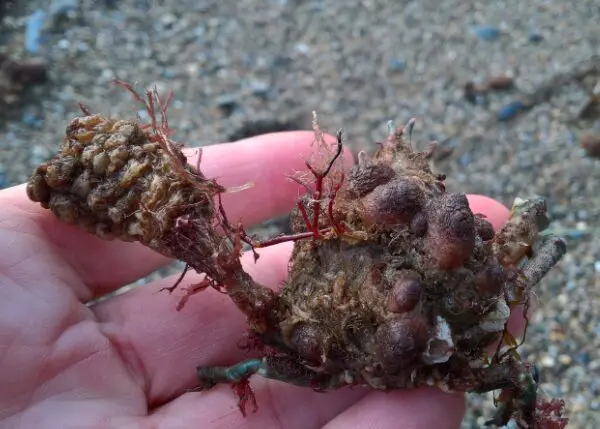
Leathery sea squirt attached to crab – Dawn Thomas
What impacts do marine INNS have?
INNS are one of the top five causes of global biodiversity loss and are estimated to cost the British economy £4 billion per year. Impacts include:
- Loss of commercially important species
- Management and control of INNS costs
- Smothering, eating and outcompeting native species (e.g., for food and space)
- Altering habitats (e.g., changing surface of the seafloor and impacting ecosystem)
- Clogging and fouling structures (e.g., aquaculture equipment, navigational aids, outflow pipes and piers)
- Introducing diseases, pests and parasites
- Fouling hulls of boats and ships (meaning more drag and higher fuel costs)
For more information, see: Assessing the impact of key Marine Invasive Non-Native Species on Welsh MPA habitat features, fisheries and aquaculture and Marine INNS in Wales.
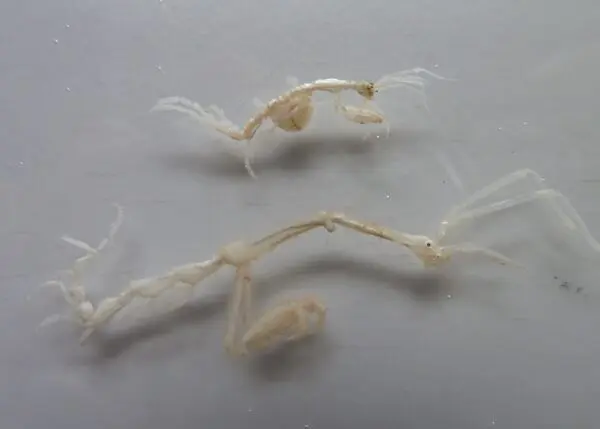
Japanese skeleton shrimp – Natural Resources Wales
How do marine INNS get here?
The ways in which INNS are moved from one location to another by humans are called “pathways”. Examples of marine INNS pathways include commercial shipping, aquaculture and recreational boating.
Pathways can be over great distances, introducing INNS to new areas outside of their native range, or they can be over short distances, helping a species to spread onwards from its initial introduction point.
See Marine Pathways in Wales for more information on how INNS are spread by different pathways.
INNS can be microscopic and can survive in damp conditions for long periods of time. Animals can be moved as eggs, larvae, juveniles or adults. Seaweed can be moved as fragments or spores (their reproductive structures). Larvae can be planktonic (drift with currents) or free-swimming (can actively move).
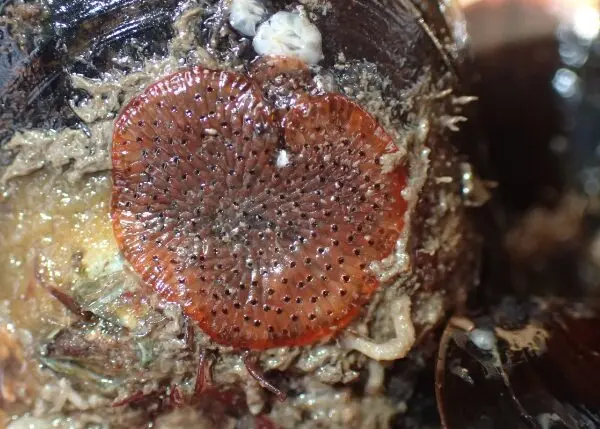
Red Ripple Bryozoan attached to a mussel – Paul Brazier
What is biosecurity?
Biosecurity measures are actions, procedures and behaviours put in place to reduce the risk of INNS introduction and spread. Preventing the introduction and spread of INNS in the first place is by far the most effective way to manage INNS, especially in the marine environment.
For information on the seven main areas of biosecurity, click here.
What is a biosecurity action plan?
A Biosecurity Action Plan (BAP) provides practical and effective actions to minimise the risk of introducing and spreading INNS in a specific area / site or for a specific activity. See Links and Resources for information on how to write a biosecurity plan.
BAPs have been developed for marine special areas of conservation in Wales. A national Marine Biosecurity Action Plan for Wales has also been produced. The key information from these BAPs is summarised on this website to help you quickly find what you need. See Marine Biosecurity Action Plan for Wales, for more information and links to the full documents.