
Marine INNS in Wales
Below are some examples of marine INNS that pose a risk to Welsh seas. Some of the INNS are already known to be present and breeding in Wales. Others are not currently recorded in Wales but should be monitored for, these are called ‘horizon species’ (highlighted orange). It is important to identify species that may be on the horizon so that biosecurity actions can be put in place to prevent their introduction, or monitoring programmes can be put in place to aid timely detection and response.
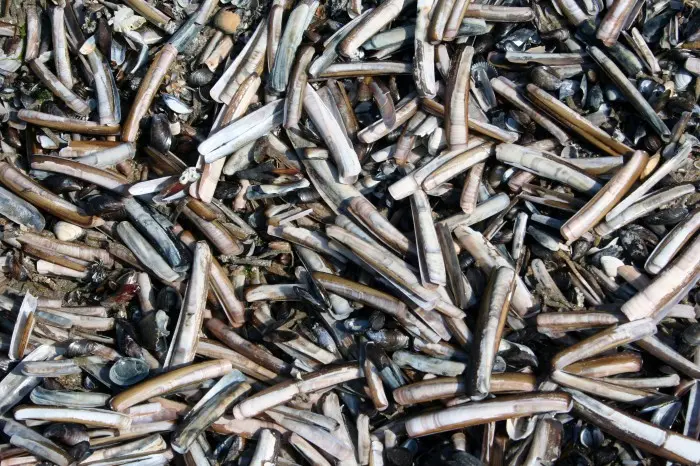
American jack knife clam
(Ensis leei)
How they spread:
- The young (larvae) float freely in the water for around four weeks and so can be transported in ballast water as well as the water transported with farmed shellfish.
- The young (larvae) can also be transported by tides and currents.
Why they are a problem:
- Overcrowd and outcompete native shellfish.
- Large numbers may damage fishing gear or create hazards for people working in aquaculture.
For more information see the GB NNSS Information Portal and NBN Atlas.
—
📸 © American jack knife clam – Delva
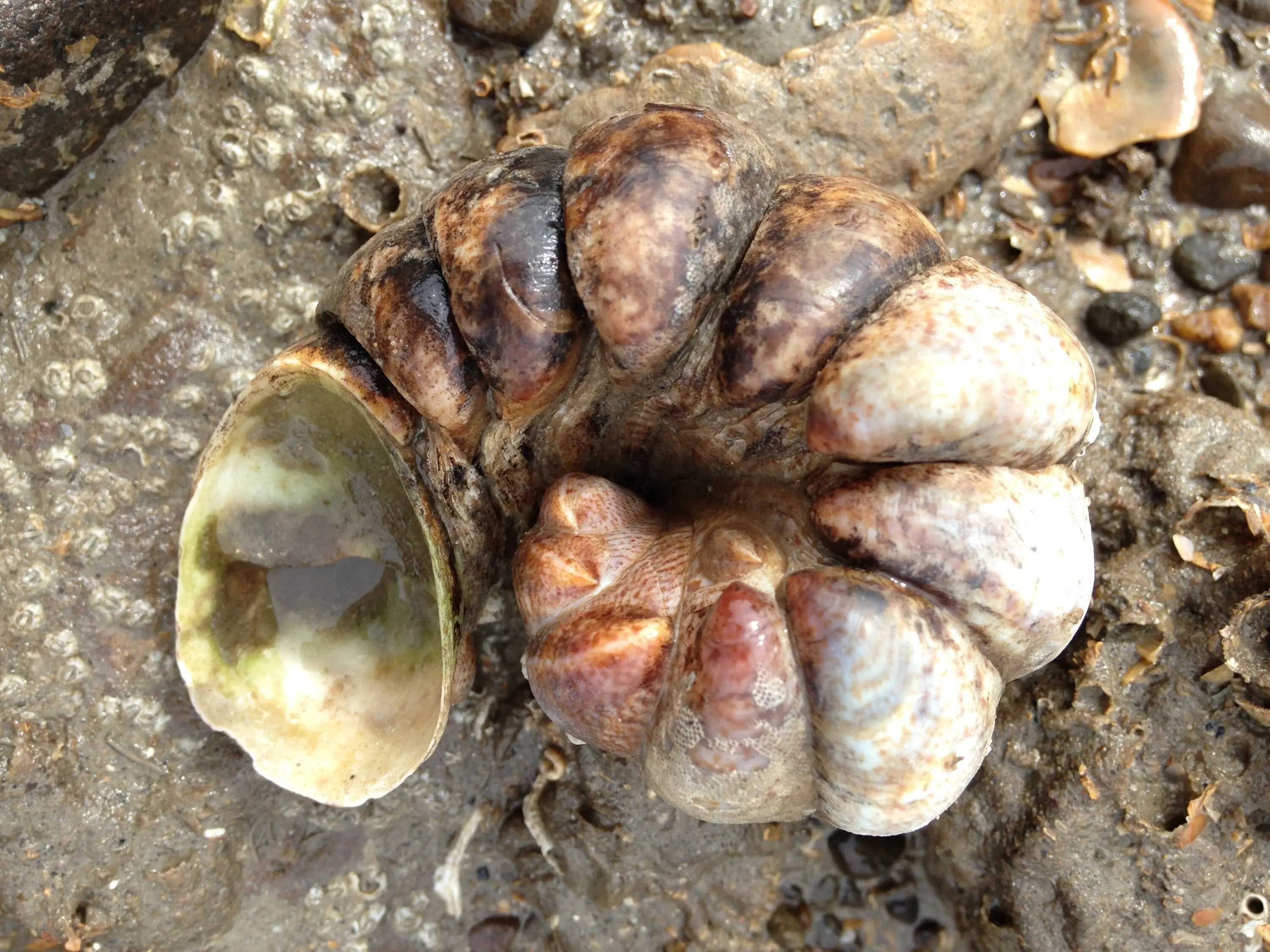
American slipper limpet
(Crepidula fornicata)
How they spread:
- The young (larvae) swim in the water for around five weeks and so can be transported in ballast and bilge water as well as the water transported with farmed shellfish.
- The young (larvae) can also be transported by tides and currents.
- Attach to shellfish, boats and fishing gear which when moved can cause it to spread.
- Moved in dredged sediment.
- Moved as fishing bait.
Why they are a problem:
- Create dense mats that smother other species.
- Overcrowd and outcompete native species.
- Alter the seabed and reduce space for native shellfish larvae to settle and for fish to spawn.
For more information see the GB NNSS Information Portal and NBN Atlas. A link to the Species Action Plan can be found here.
–
📸 © American slipper limpet, Swansea Bay – Chloe Powell Jennings
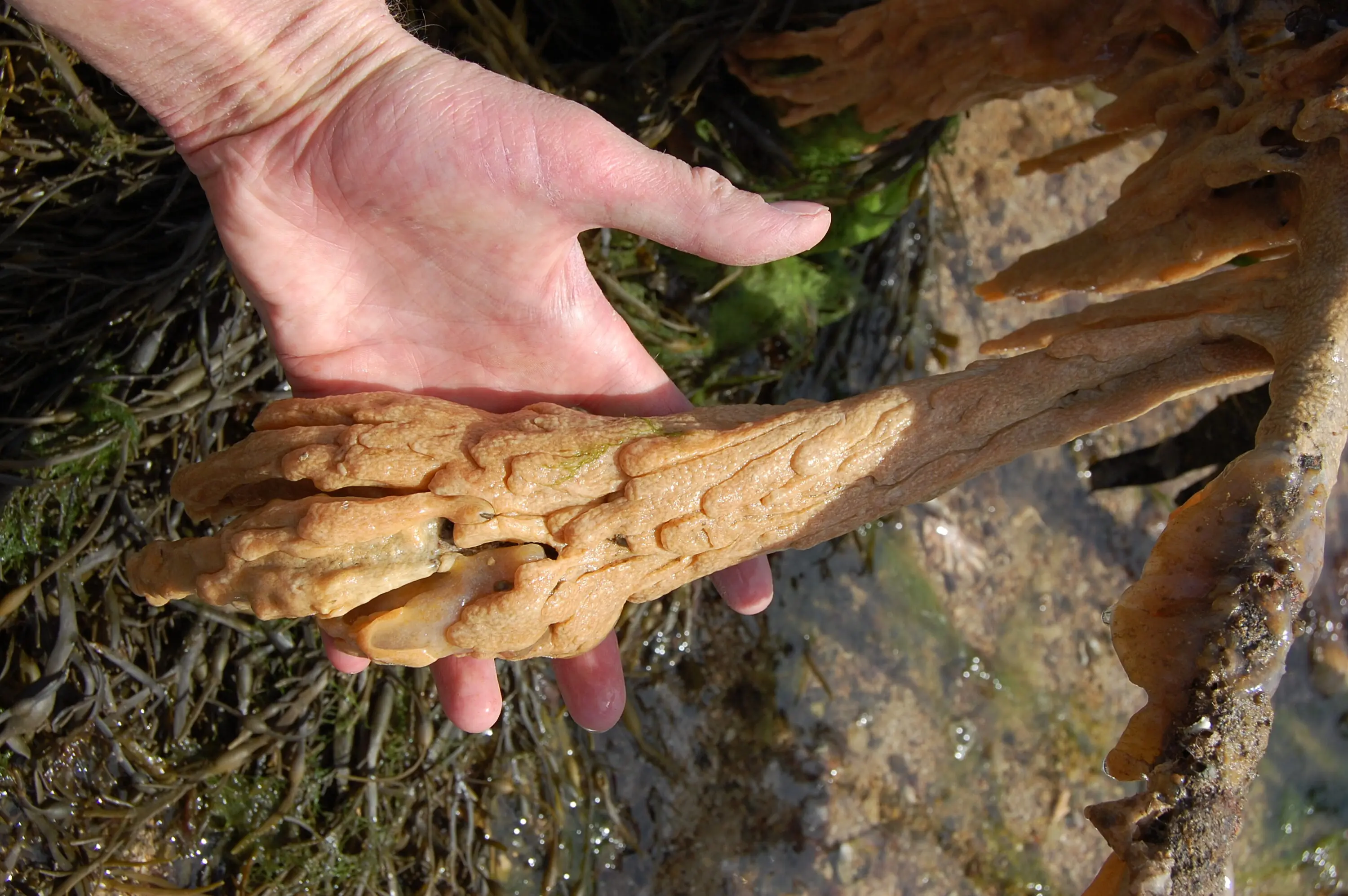
Carpet sea squirt
(Didemnum vexillum)
How they spread:
- Can break into fragments that can be transported by tides and currents, which can then reattach and regrow elsewhere, these fragments can survive for up to 30 days.
- Attach to boat hulls, marina structures and farmed shellfish which when moved can cause it to spread.
- Fragments can survive in water-retaining features of boats and equipment, which means they can be introduced to new areas if they aren’t properly cleaned before being used in a new area.
Why they are a problem:
- Smother native species and farmed shellfish, causing loss of biodiversity and commercial profit.
- Foul equipment, boats and infrastructure, increasing cleaning costs and time.
- Change natural seabed habitats, which can impact our native species.
For more information see the GB NNSS Information Portal and NBN Atlas. A link to the Species Action Plan can be found here.
–
📸 © Carpet sea squirt – Joe Ironside
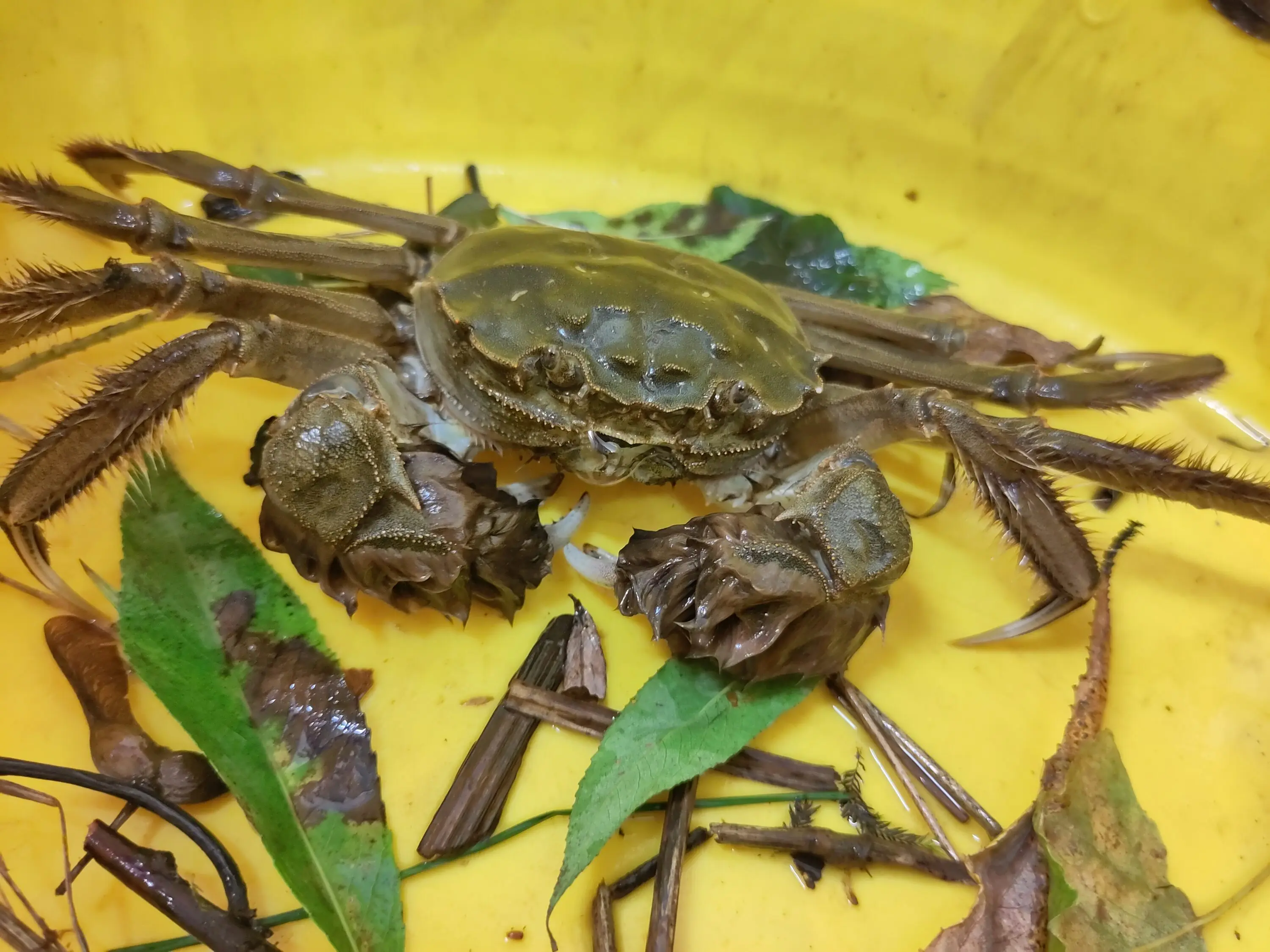
Chinese mitten crab
(Eriocheir sinensis)
How they spread:
- Female crabs can lay between 250,000 and 1 million eggs, the newly hatched young (larvae) float freely in the water for up to two months before they settle and develop into the typical crab form.
- Young (larvae) and juveniles can be transported in ballast, hopper and bilge water.
- The young (larvae) can also be transported by tides and currents.
- Juveniles can hide among other fouling species.
- Can tolerate a wide range of environmental conditions, including highly polluted waters, increasing the number of potential sites for them to colonise.
- Can also travel long distances (recorded up to 1,500km) on their own and climb obstacles.
Why they are a problem:
- Burrow into riverbanks, causing erosion and increasing flooding risk.
- Compete with and eat native species.
- Cause problems for fisheries by damaging nets and eating catch.
- Block pipes and damage infrastructure.
- Crabs spend 2-5 years in freshwater and migrate to estuarine and marine environments in the autumn to breed. Once the young (larvae) start to develop into juveniles they migrate back upstream, eventually reaching freshwater as adults. Having different life stages that require both freshwater and marine to complete their lifecycle means they can potentially impact lots of different vulnerable species and habitats.
For more information see the GB NNSS Information Portal and NBN Atlas. A link to the Species Action Plan can be found here.
–
📸 © Chinese mitten crab – Chloe Powell Jennings
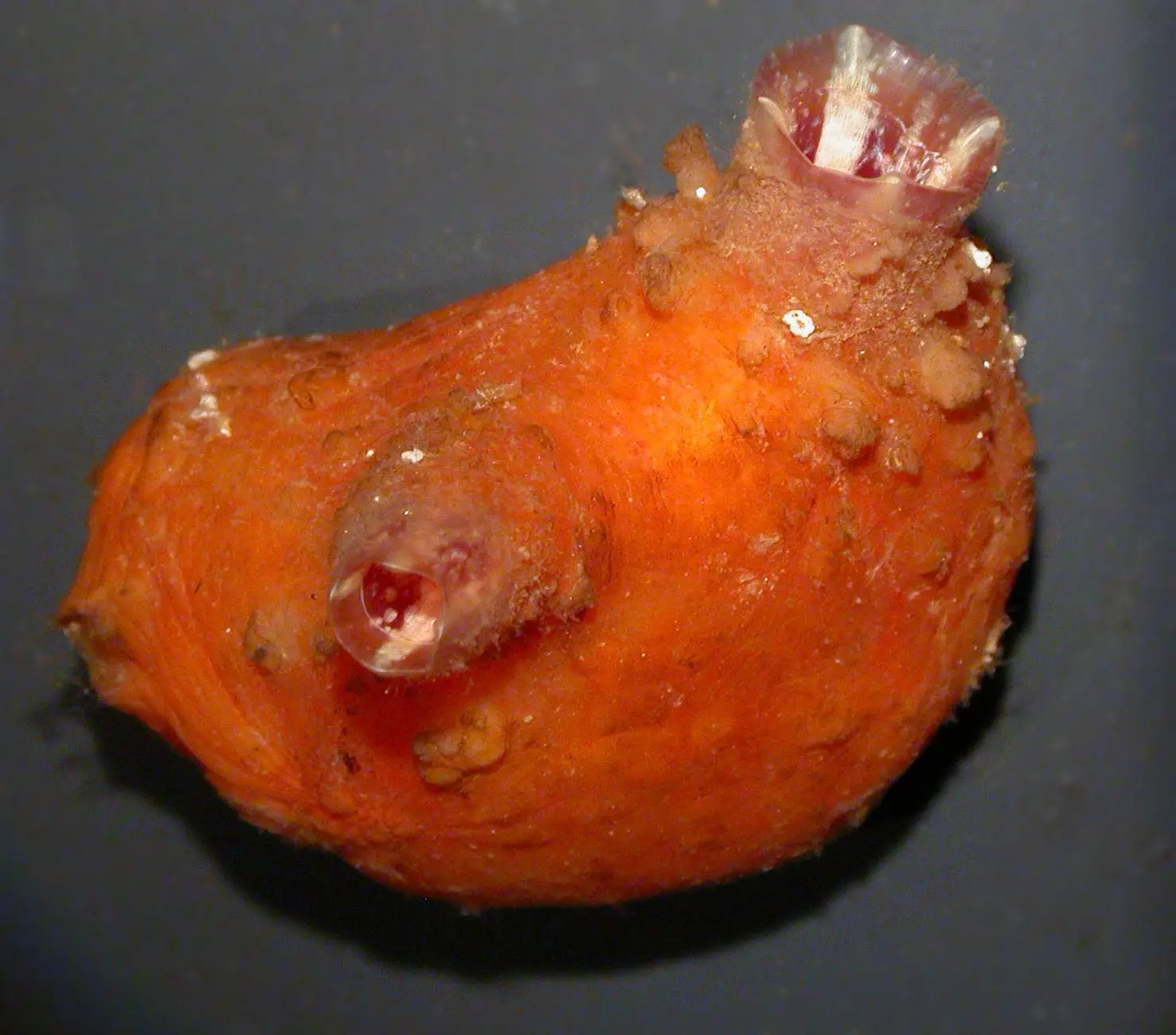
Compass sea squirt
(Asterocarpa humilis)
How they spread:
- Attach to boats, aquaculture equipment, and farmed shellfish.
- Natural spread of the young (larvae) is limited because they are retained by the adult after hatching, meaning they don’t float freely in the water.
Why they are a problem:
- Smother native species and farmed shellfish, causing loss of biodiversity and commercial profit.
- Block water intake pipes.
- Foul boats, pontoons and equipment like moorings and aquaculture equipment, increasing cleaning costs and time.
For more information see the GB NNSS Information Portal and NBN Atlas.
–
📸 © Compass sea squirt – John Bishop (MBA)
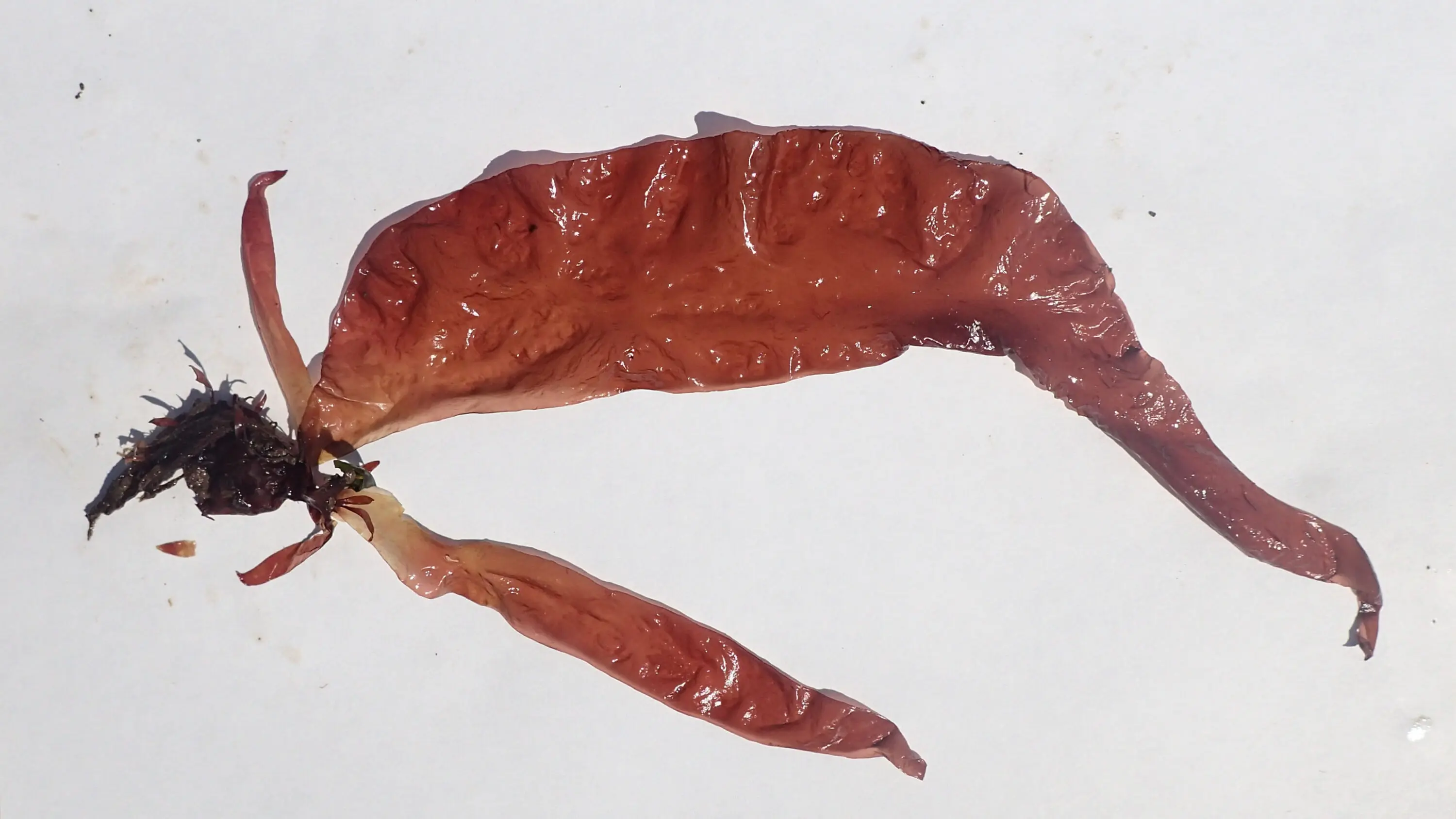
Devil’s tongue weed
(Grateloupia turuturu)
How they spread:
- Attach to boat hulls and shellfish, which when moved can cause it to spread.
- Tiny spores (reproductive structures) can be transported in ballast water and in water that has been retained in equipment.
- Strands can become entangled in equipment, which when moved can cause it to spread.
Why they are a problem:
- Overgrow and outcompete native seaweeds and important habitats such as seagrass.
- Foul or become tangled in nets, ropes, and aquaculture equipment, increasing cleaning costs and time.
For more information see the GB NNSS Information Portal and NBN Atlas.
–
📸 © Devil’s tongue weed- Chris Wood (MBA)
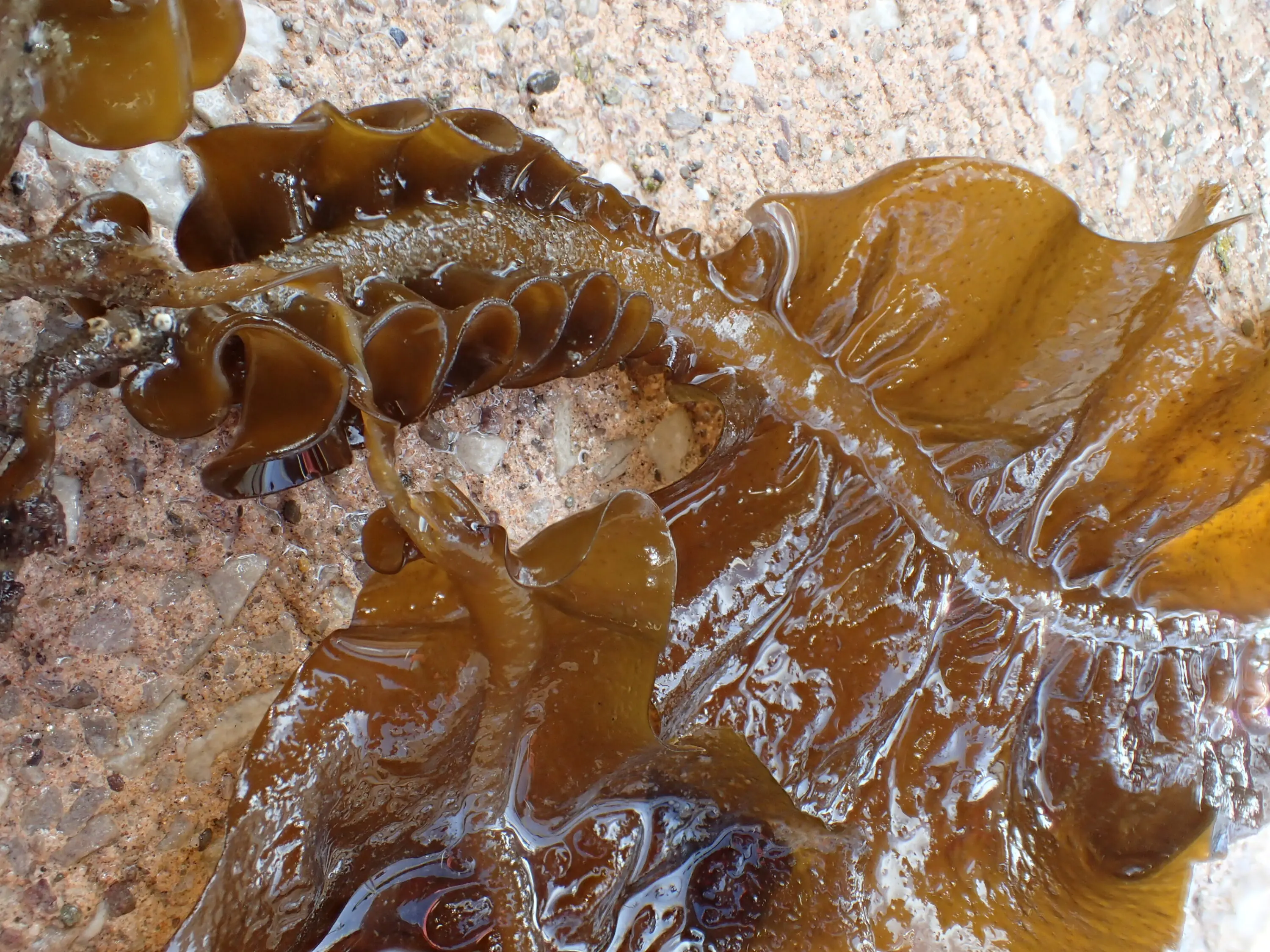
Wakame
(Undaria pinnatifida)
How they spread:
- Strands attached to boat hulls and shellfish.
- Spores (reproductive structures) transported in ballast or bilge water, or in the water transported with shellfish.
- Spores can survive for up to 2 years under certain conditions, and can survive a wide range of temperatures which means spread over long distances is possible.
Why they are a problem:
- Form dense forests that outcompete native seaweeds.
- Foul boats and marina structures, and can become tangled in nets, ropes and aquaculture equipment, increasing cleaning costs and time.
- Take up valuable space needed by commercially important shellfish.
For more information, see GB NNSS Information Portal and NBN Atlas.
–
📸 © Wakame – Paul Brazier
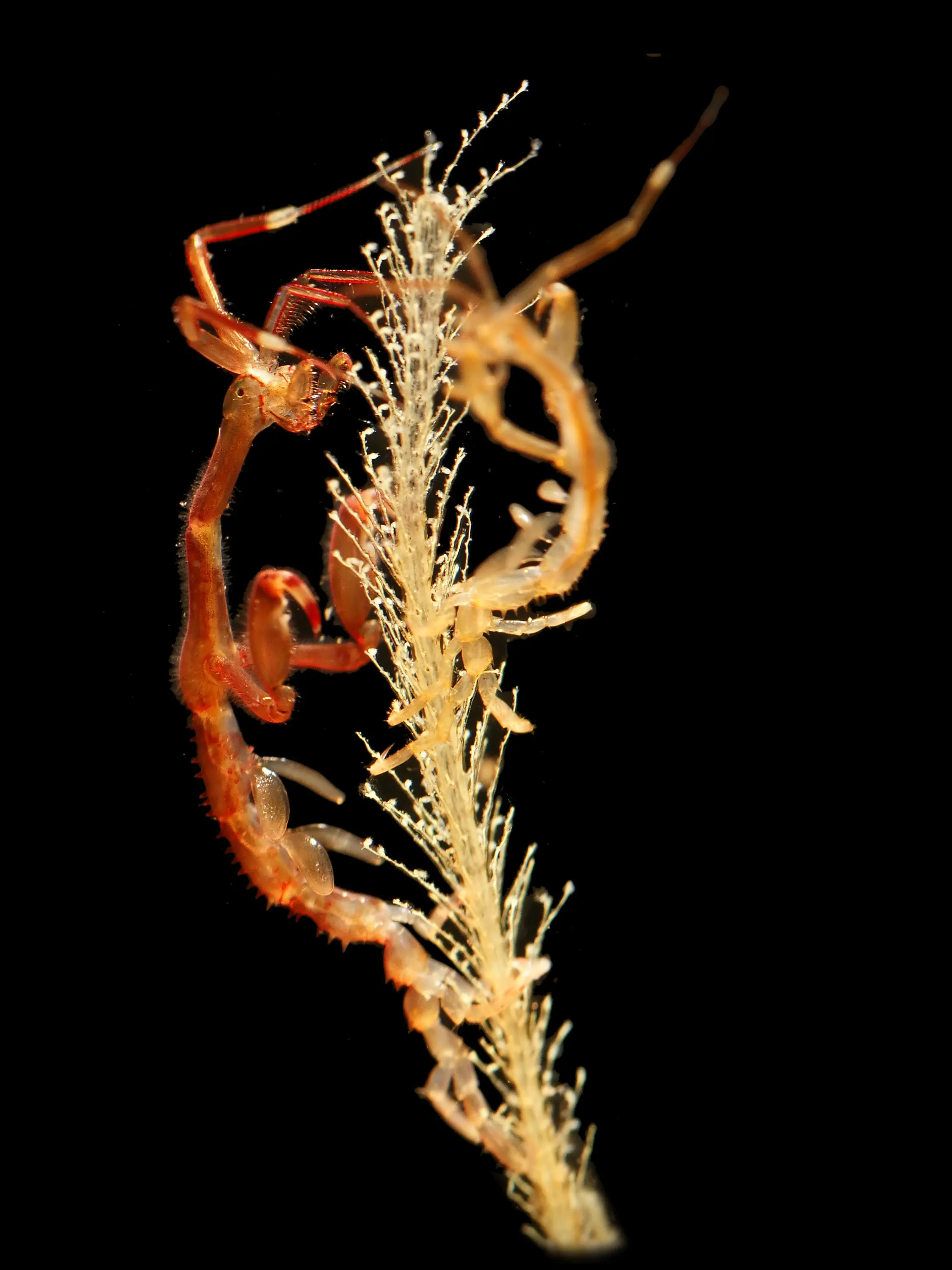
Japanese skeleton shrimp
(Caprella mutica)
How they spread:
- Difficult to detect due to small size (usually under 50mm).
- Minimal movement of adults through currents and tides, so predominantly moved as ‘hitchhikers’. Transported in water-retaining features or attached to clothing and equipment.
- Transported in water that is moved with shellfish or can cling onto shellfish, boats and equipment.
Why they are a problem:
- Compete with native species for food and space.
For more information see the GB NNSS Information Portal and NBN Atlas.
–
📸 © Japanese skeleton shrimp – Hans Hillewaert
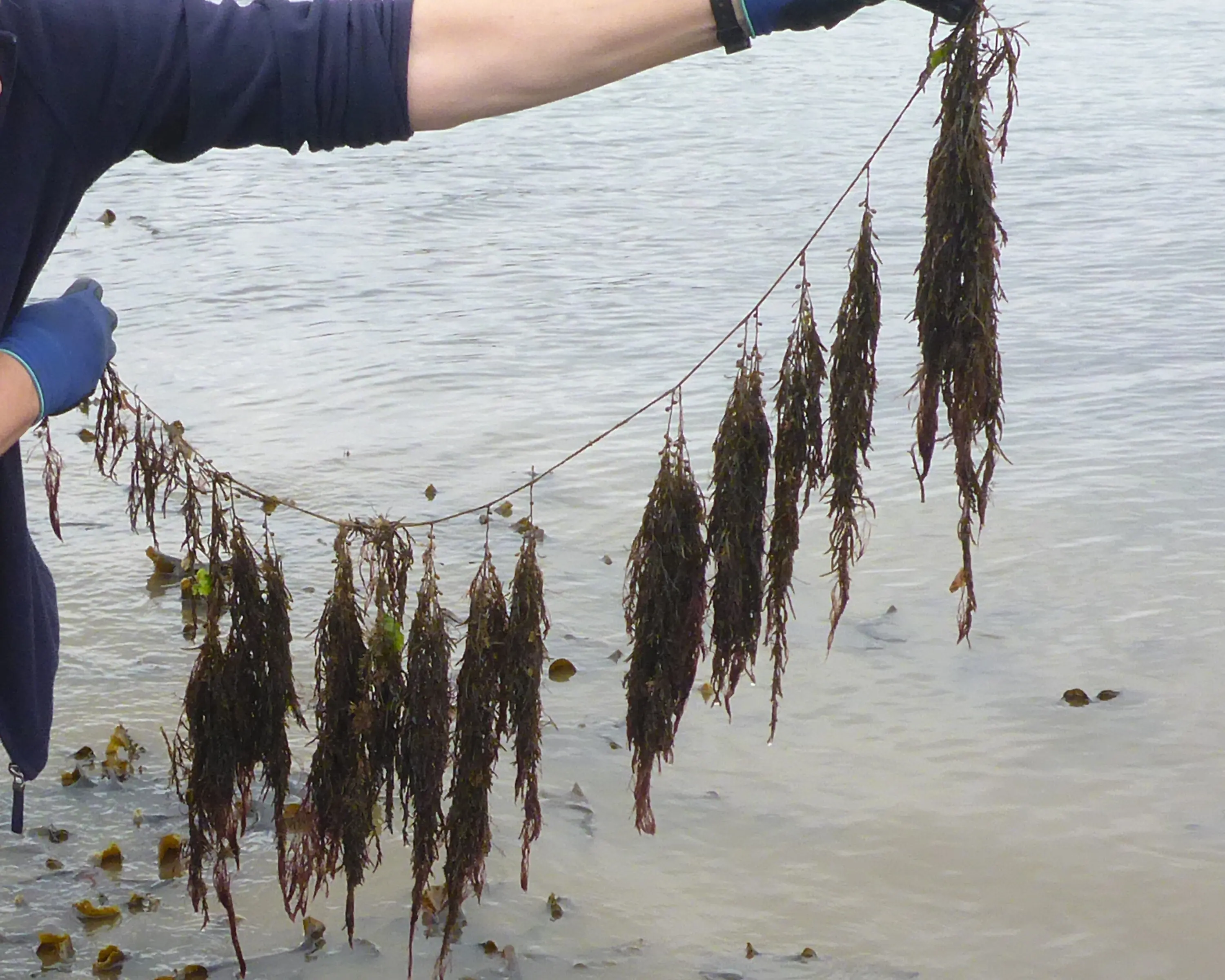
Japanese wireweed
(Sargassum muticum)
How they spread:
- Can break into fragments which can survive for up to three months.
- Fragments can survive in water-retaining features of boats and equipment, which means they can be introduced to new areas if they’re not properly cleaned before being used in a new area.
- Strands and fragments can become caught in propellers and other gear.
- Fragments can also be transported by tides and currents.
Why they are a problem:
- Form large floating mats that block waterways and smother beaches.
- Become tangled in propellers and fishing gear, causing a nuisance to the user and damage to gear.
- Overgrow and outcompete native seaweeds and important habitats such as seagrass.
For more information see the GB NNSS Information Portal and NBN Atlas.
–
📸 © Japanese wireweed – John Bishop (MBA)
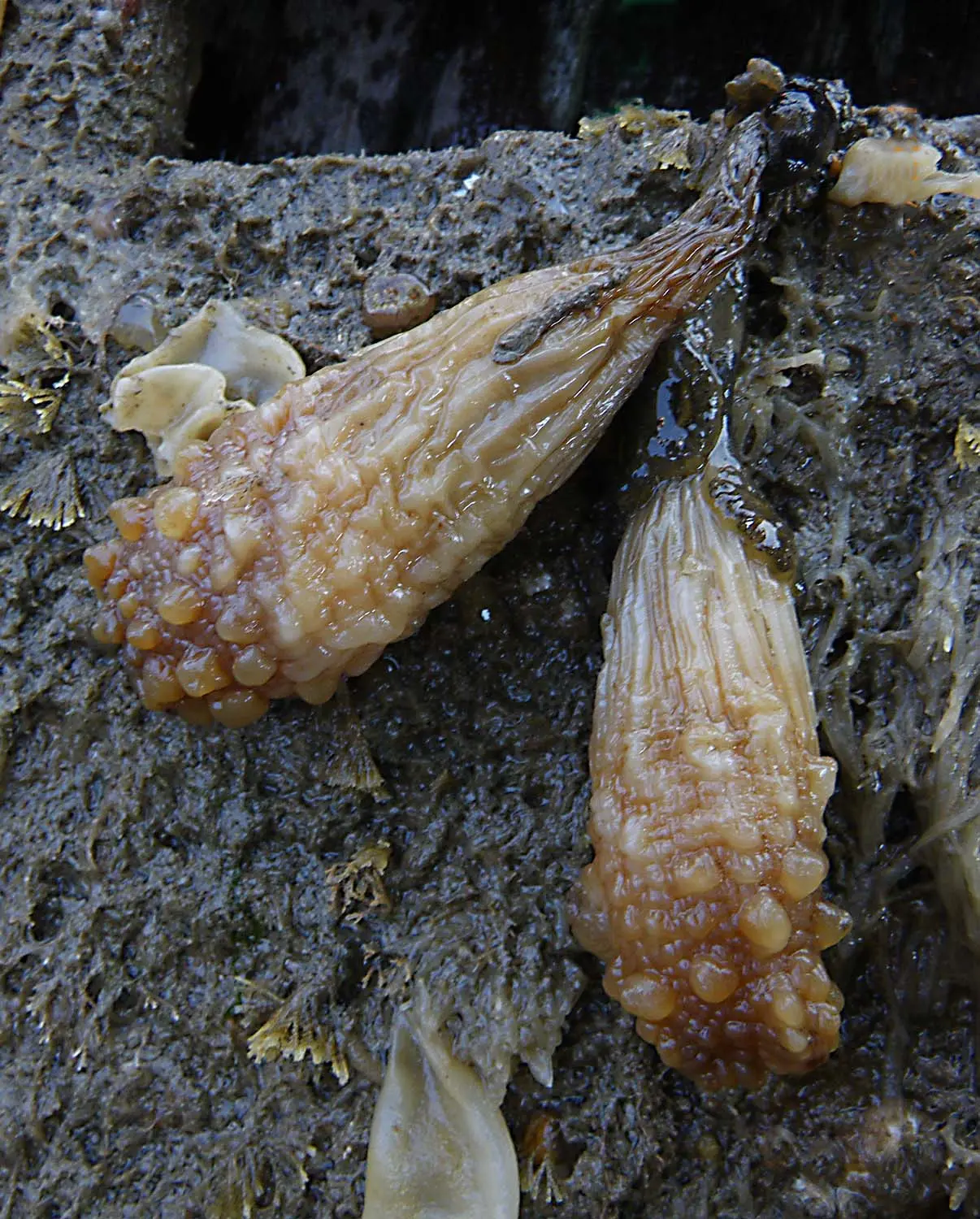
Leathery sea squirt
(Styela clava)
How they spread:
- Attach to boat hulls, buoys, ropes, and shellfish which when moved can cause it to spread.
- The young (larvae) float freely in the water for 1-3 days.
- The young (larvae) can survive in water-retaining features of boats and equipment, which means they can be introduced to new areas if they’re not properly cleaned before being used in a new area.
- The young (larvae) can also be transported by tides and currents.
Why they are a problem:
- Heavy fouling of boats and aquaculture equipment, increasing cleaning costs and time.
- Smother native and commercially important shellfish.
- Its tough surface can be a surface for other invasive species to grow on.
For more information, see the GB NNSS Information Portal and NBN Atlas.
–
📸 © Leathery sea squirt -John Bishop (MBA)
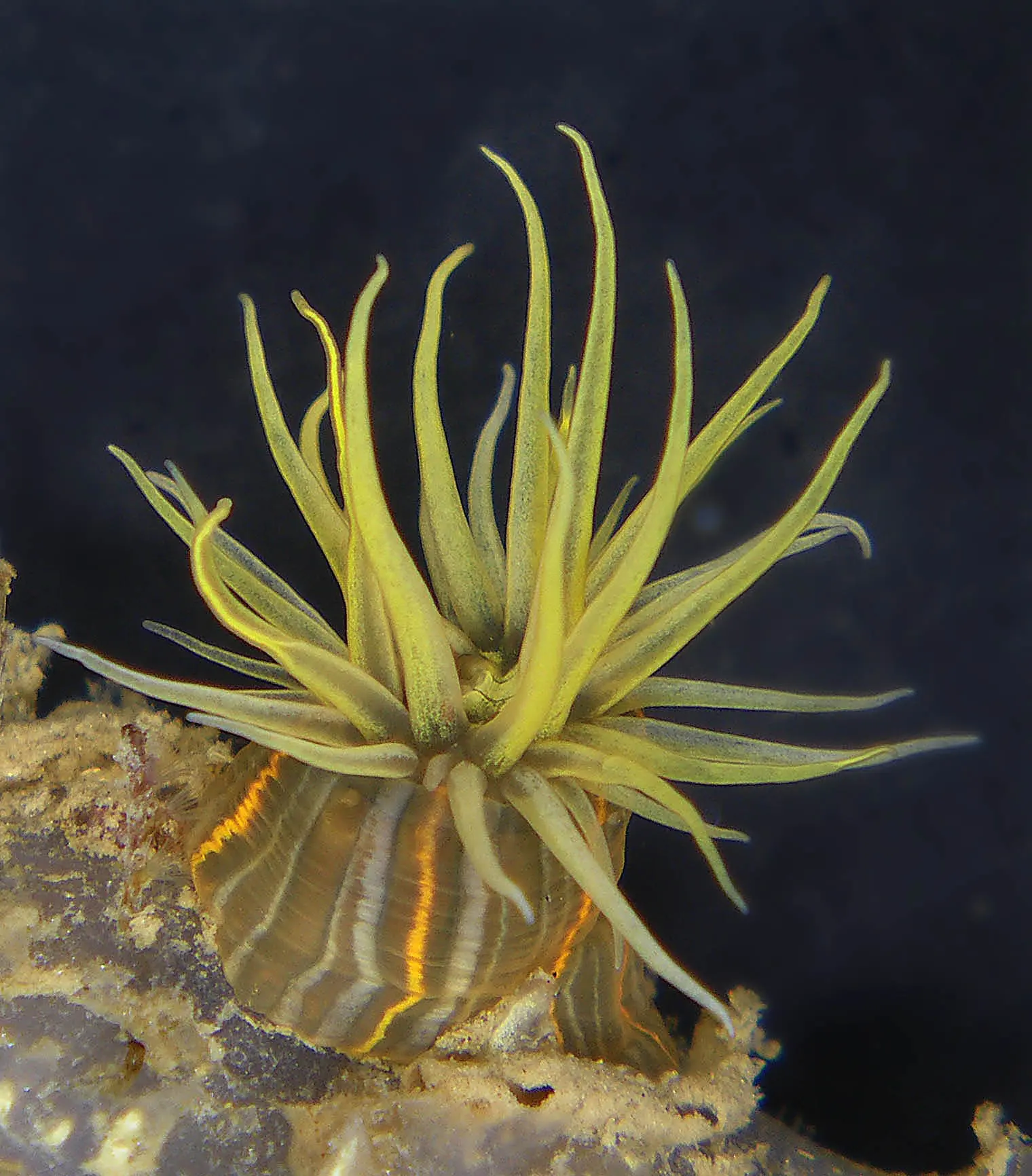
Orange-striped anemone
(Diadumene lineata)
How they spread:
- The young (larvae) swim in the water for up to two weeks and so can be transported in ballast water and water transported with farmed shellfish.
- Attach to boats, buoys, ropes, structures, and shellfish which when moved can cause it to spread.
- The young (larvae) can also be transported by tides and currents.
Why they are a problem:
- Foul boats, fishing and aquaculture equipment and artificial structures, increasing cleaning costs and time.
- Outcompete native species.
- May cause decline in the growth of shellfish and impede their ability to feed.
- May feed on the young (larvae) of mussels and oysters, decreasing survival and therefore catch numbers.
For more information, see GB NNSS Information Portal and the NBN Atlas.
–
📸 © Orange-striped anemone – John Bishop, (MBA)
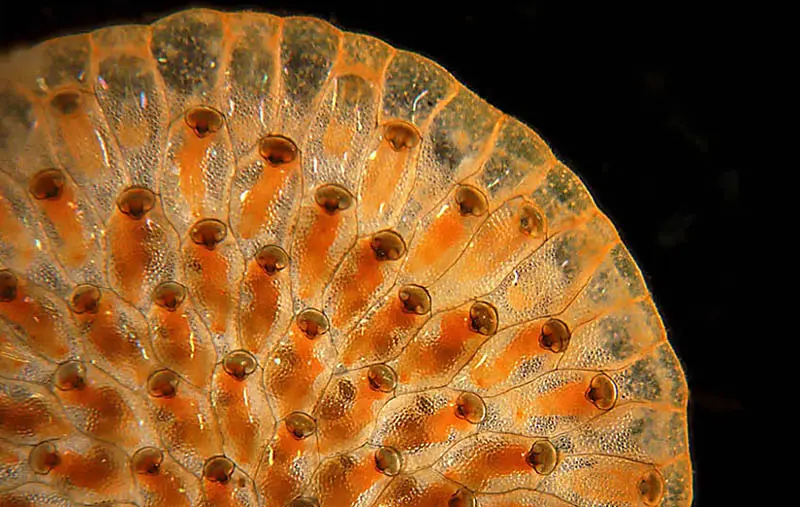
Red ripple bryozoan
(Watersipora subatra)
How they spread:
- Attach to boat hulls, marina infrastructure, equipment and shellfish which when moved can cause it to spread.
- Attach to seaweed fragments and drift to new areas and colonise.
Why they are a problem:
- Cause heavy fouling, when fouling occurs on mussels it can affect aquaculture yields.
- Because this species is resistant to copper antifouling paints, it can still grow on treated boat hulls. Once established, it creates a surface that allows other INNS to settle and grow more easily.
- Can form large colonies that affect native species.
For more information see the GB NNSS Information Portal and NBN Atlas.
–
📸 © Red ripple bryozoan – John Bishop (MBA)
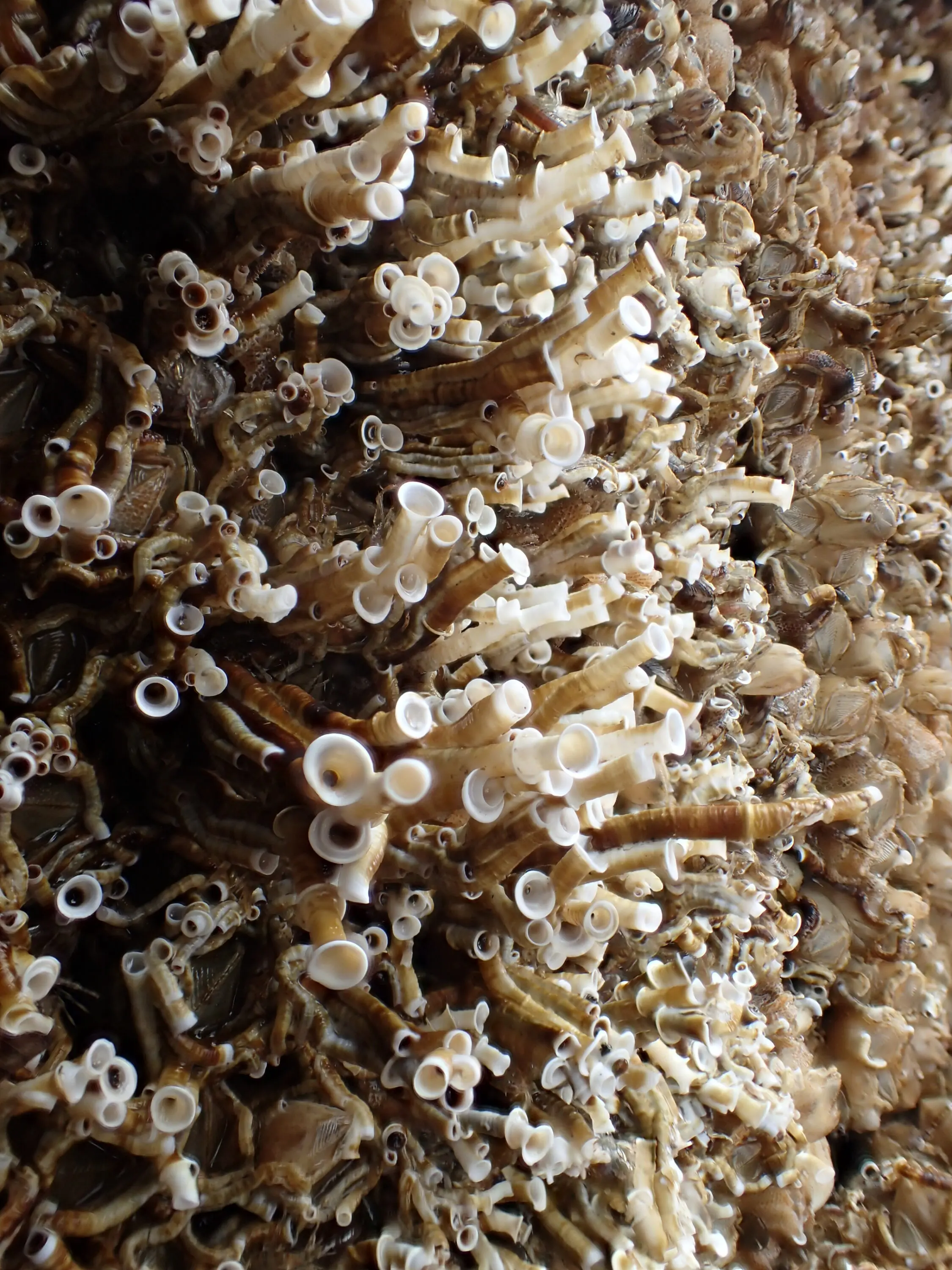
Trumpet tubeworm
(Ficopomatus enigmaticus)
How they spread:
- The young (larvae) float freely in the water for 1-3 months and so can be transported through ballast and bilge water during this time.
- Adults attach to boat hulls, equipment, structures and shellfish which when moved can cause it to spread.
- Tolerant of a wide range of environments, including areas where there is large freshwater input, such as marinas.
- The young (larvae) can also be transported by tides and currents.
Why they are a problem:
- Dense growth can form large reeflike structures that alter habitats.
- Block pipes and foul boats, equipment and structures – causing costly maintenance and cleaning.
- Heavy fouling can be heavy enough to sink pontoons and small boats.
- Outcompete native species.
- Resistant to antifouling paint, making it difficult to prevent it attaching to boats.
For more information see the GB NNSS Information Portal and NBN Atlas. A link to the Species Action Plan can be found here.
–
📸 © Trumpet tubeworm – Paul Brazier, Natural Resources Wales
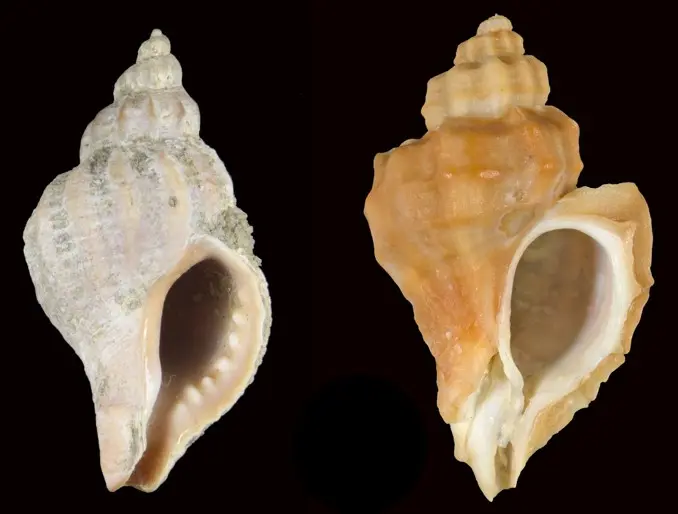
American & Japanese oyster drills
(Urosalpinx cinerea & Ocinebrellus inornatus)
Horizon Species
How they spread:
- The eggs and juveniles attach to shellfish and can be moved with stock to a new site.
- Because there is no larval stage, spread through currents and tides is minimal.
Why they are a problem:
- They are voracious predators of oysters and mussels and other native shellfish.
- They can cause significant economic damage to shellfish industries.
For more information on the American oyster drill see the GB NNSS Information Portal and NBN Atlas. For more information on the Japanese oyster drill see the GB NNSS Information Portal and NBN Atlas. A link to the Species Action Plan can be found here.
–
📸 © American and Japanese oyster drills – Amgueddfa Cymru
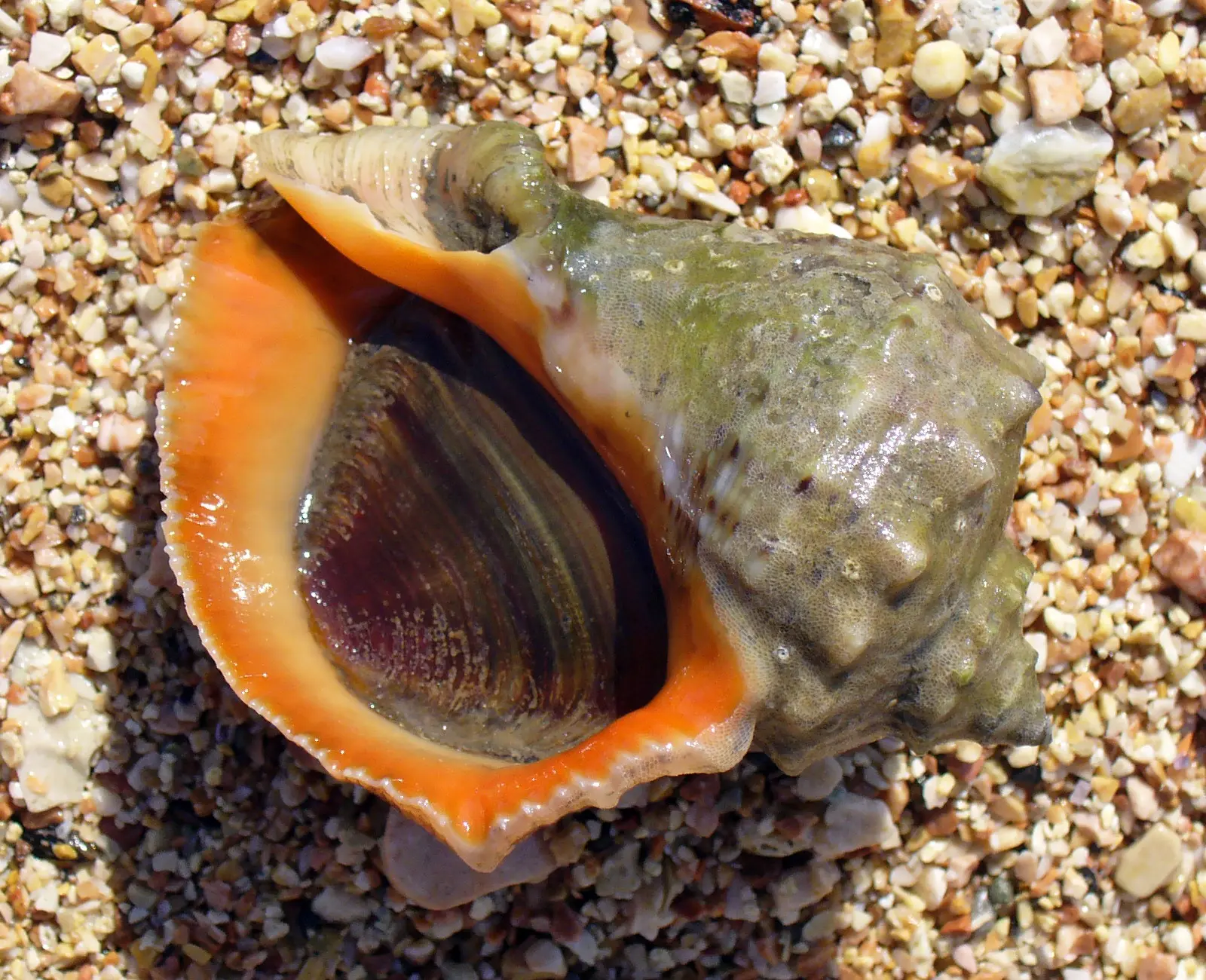
Veined rapa whelk
(Rapana venosa)
Horizon Species
How they spread:
- The young (larvae) float freely in the water for 24-80 days and so can be transported in ballast and bilge water as well as the water transported with farmed shellfish during this time.
- The young (larvae) can also be transported by tides and currents.
Why they are a problem:
- They are voracious predators of oysters and mussels and other native shellfish.
- They can cause significant economic damage to shellfish industries.
For more information, see the GB NNSS Information Portal and the NBN Atlas.
–
📸 © Veined rapa whelk – Amgueddfa Cymru
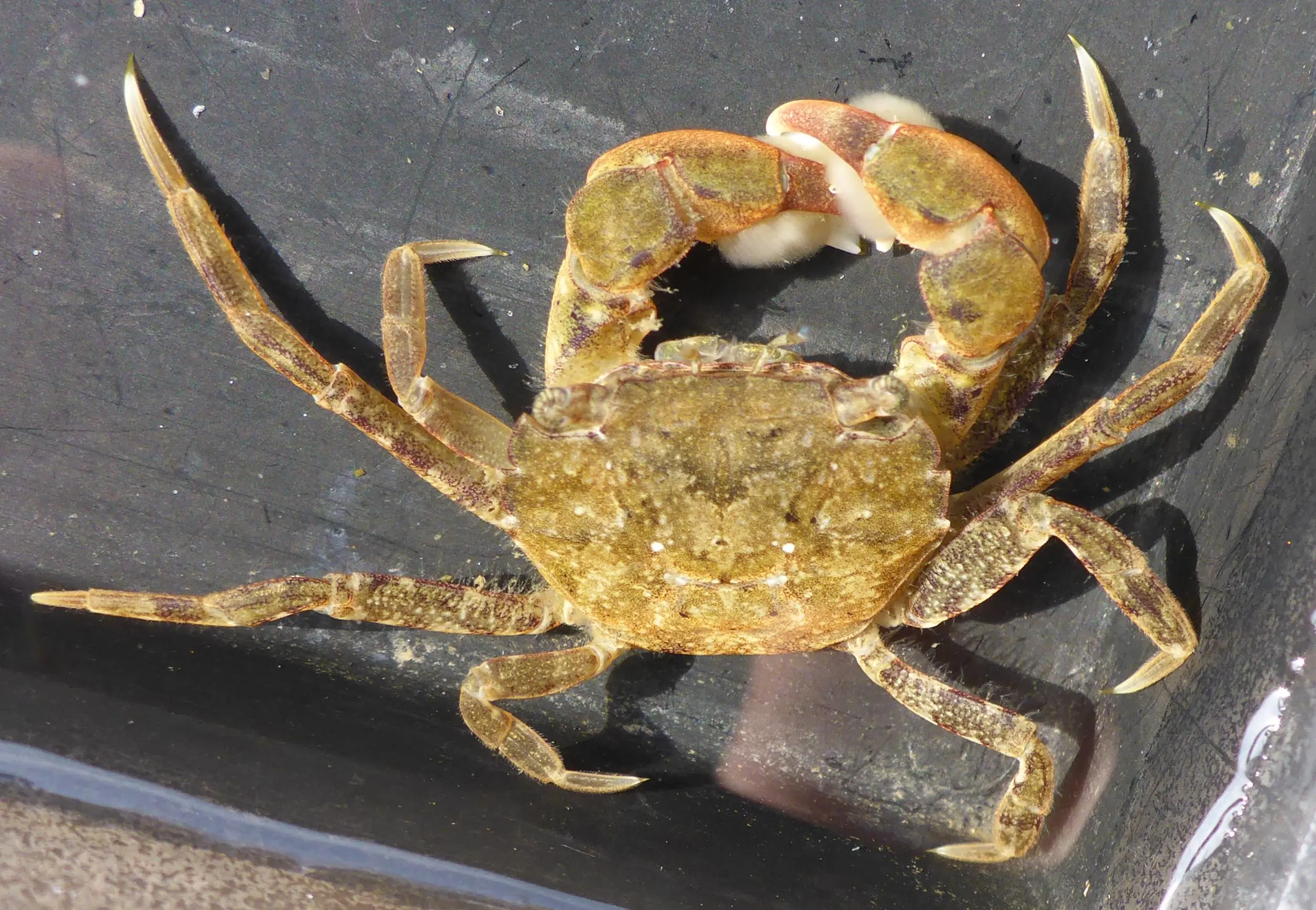
Brush-clawed shore crab
(Hemigrapsus takanoi)
Horizon Species
How they spread:
- The young (larvae) float freely in the water for 30 days and so can be transported in ballast and bilge water as well as the water transported with farmed shellfish during this time.
- The young (larvae) can also be transported by tides and currents.
- Adults can move with hull fouling communities, clinging to other species or hiding in crevices.
Why they are a problem:
- Outcompete native crabs for food and space.
- Feed on young mussels and oysters, potentially devastating aquaculture stocks and native species.
For more information, see the GB NNSS Information Portal and NBN Atlas.
–
📸 © Brush-clawed crab – John Bishop, (MBA)
Current distributions of INNS around Wales (and the UK more broadly) can be viewed by searching on the National Biodiversity Network Atlas. Species-specific information is also available from the searchable GB NNSS Information Portal.
See the Marine INNS Welsh Priority Monitoring and Surveillance List for a list of marine INNS of most concern to Wales.
Six species were prioritised for Species Action Plans (SAP) in Wales. These provide more specialised advice and list possible actions that could be carried out to reduce the introduction and spread of that species into and around Welsh seas:
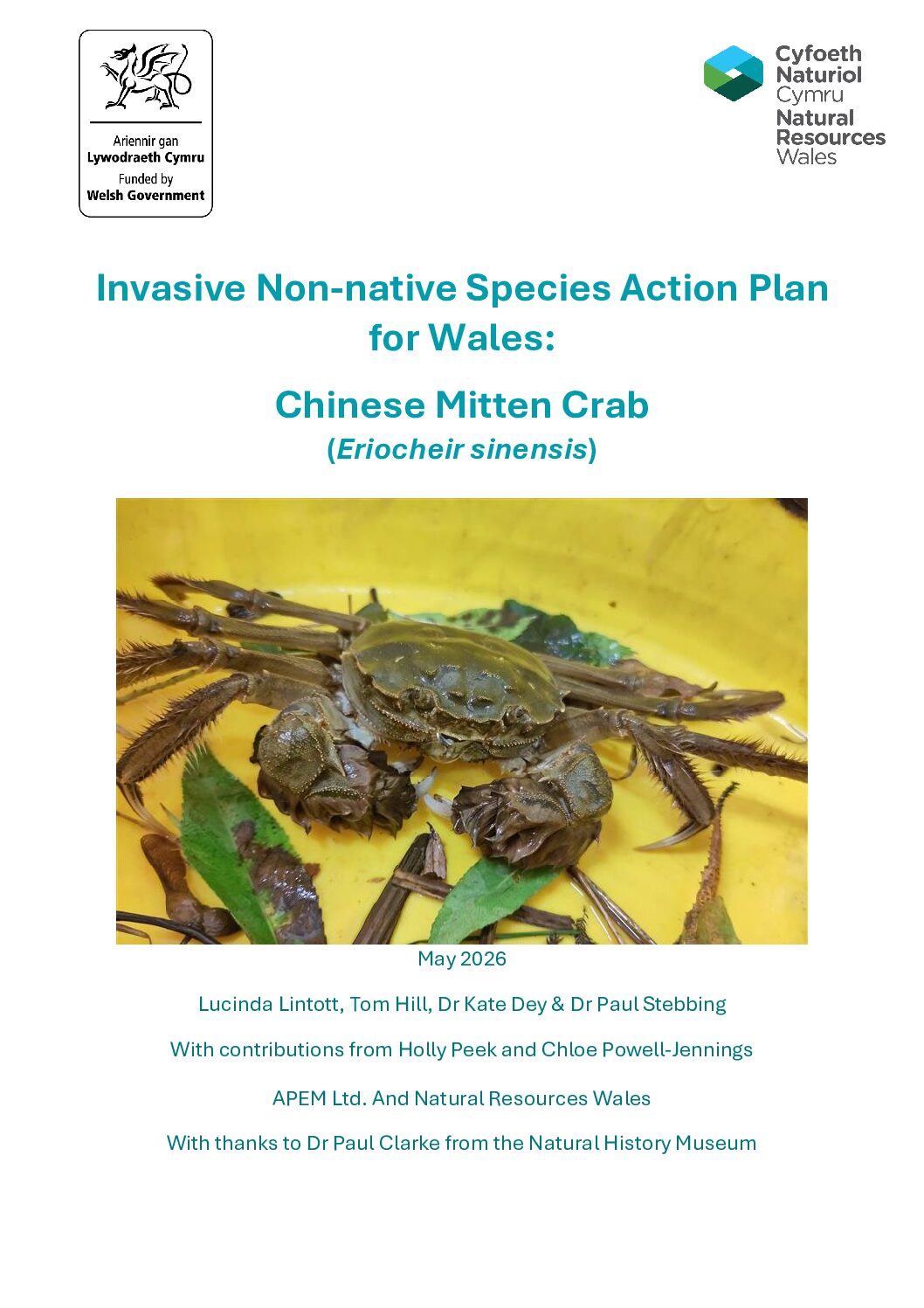
Chinese mitten crab, Eriocheir sinensis
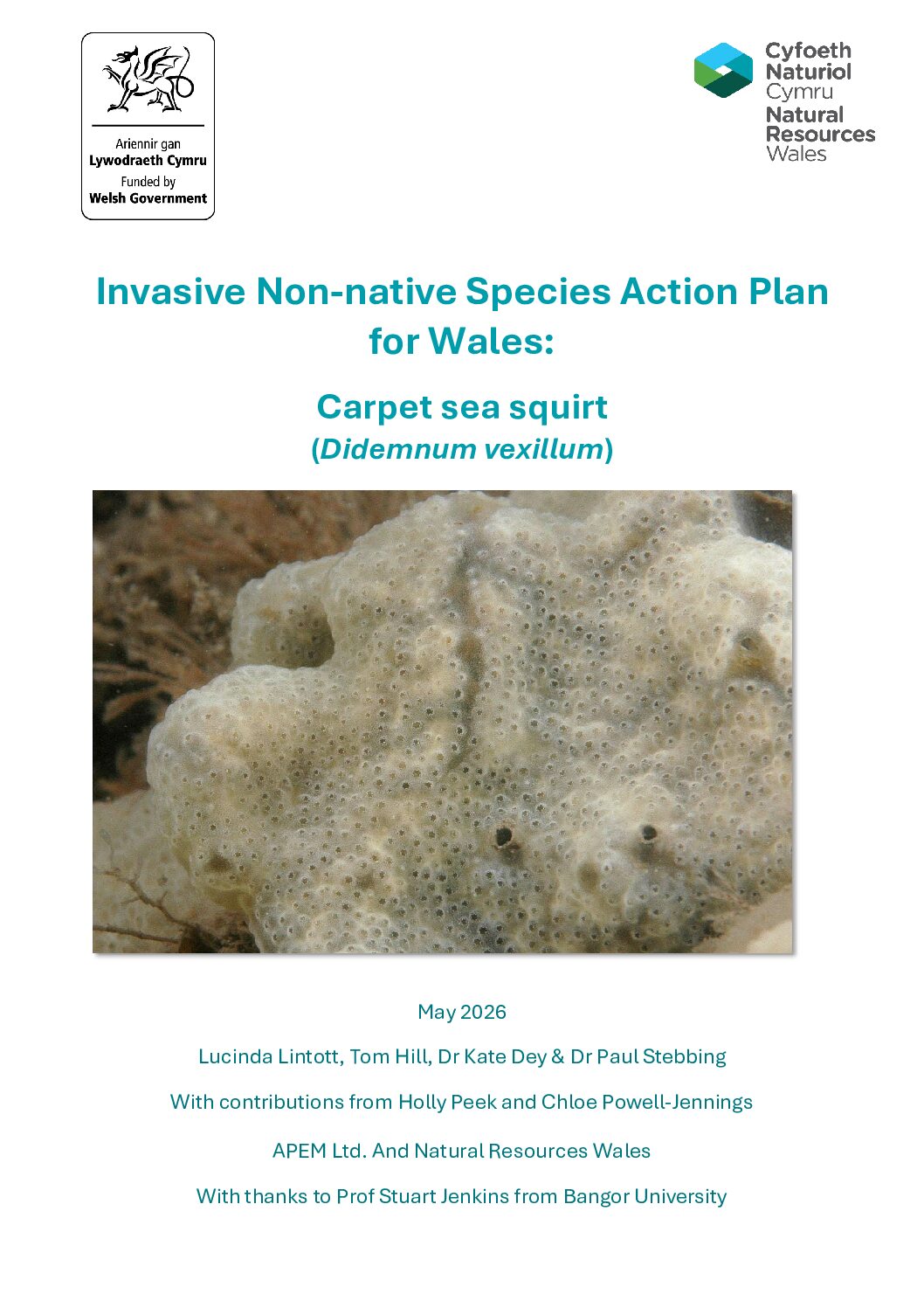
Carpet sea squirt, Didemnum vexillum
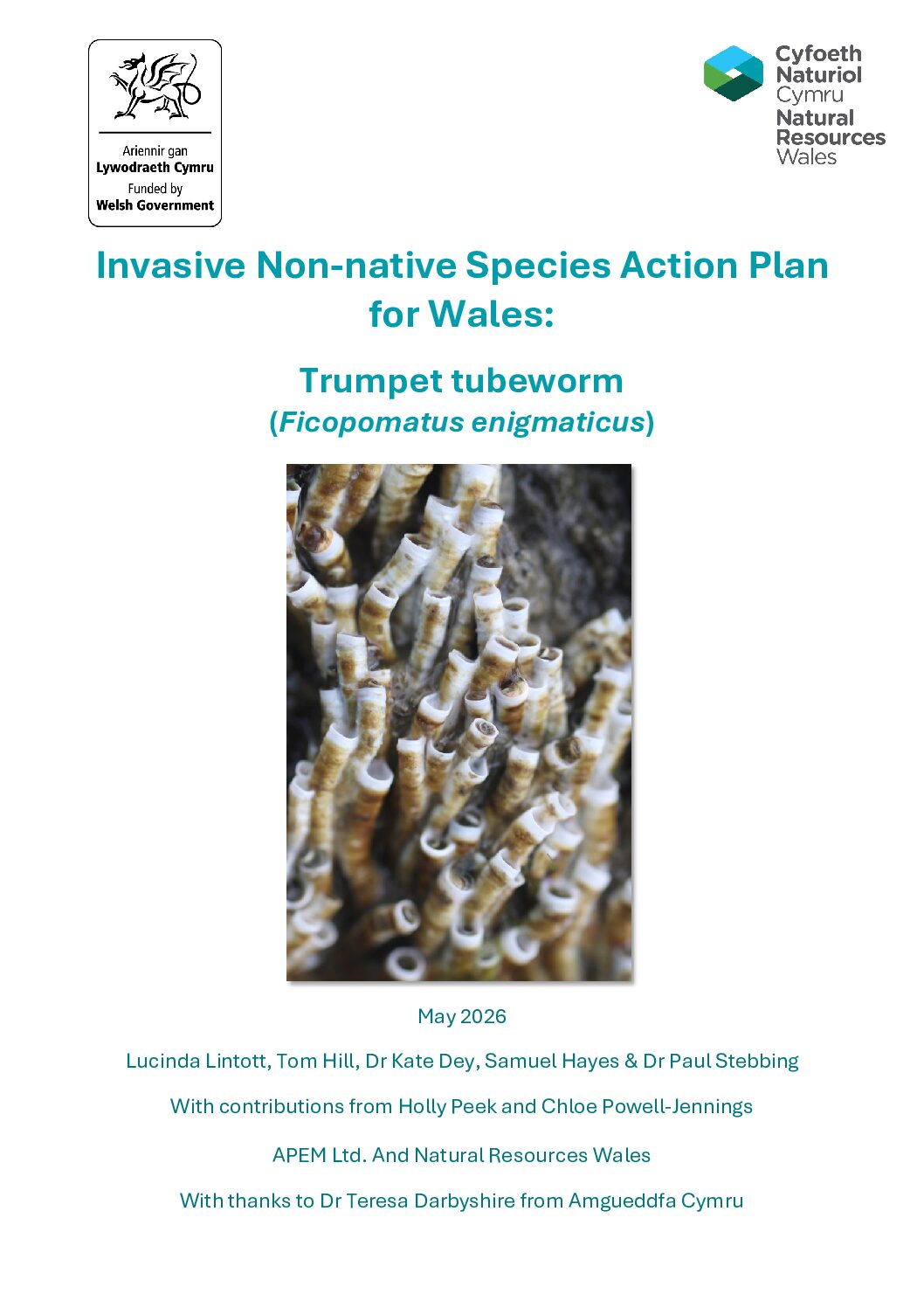
Trumpet tubeworm, Ficopomatus enigmaticus
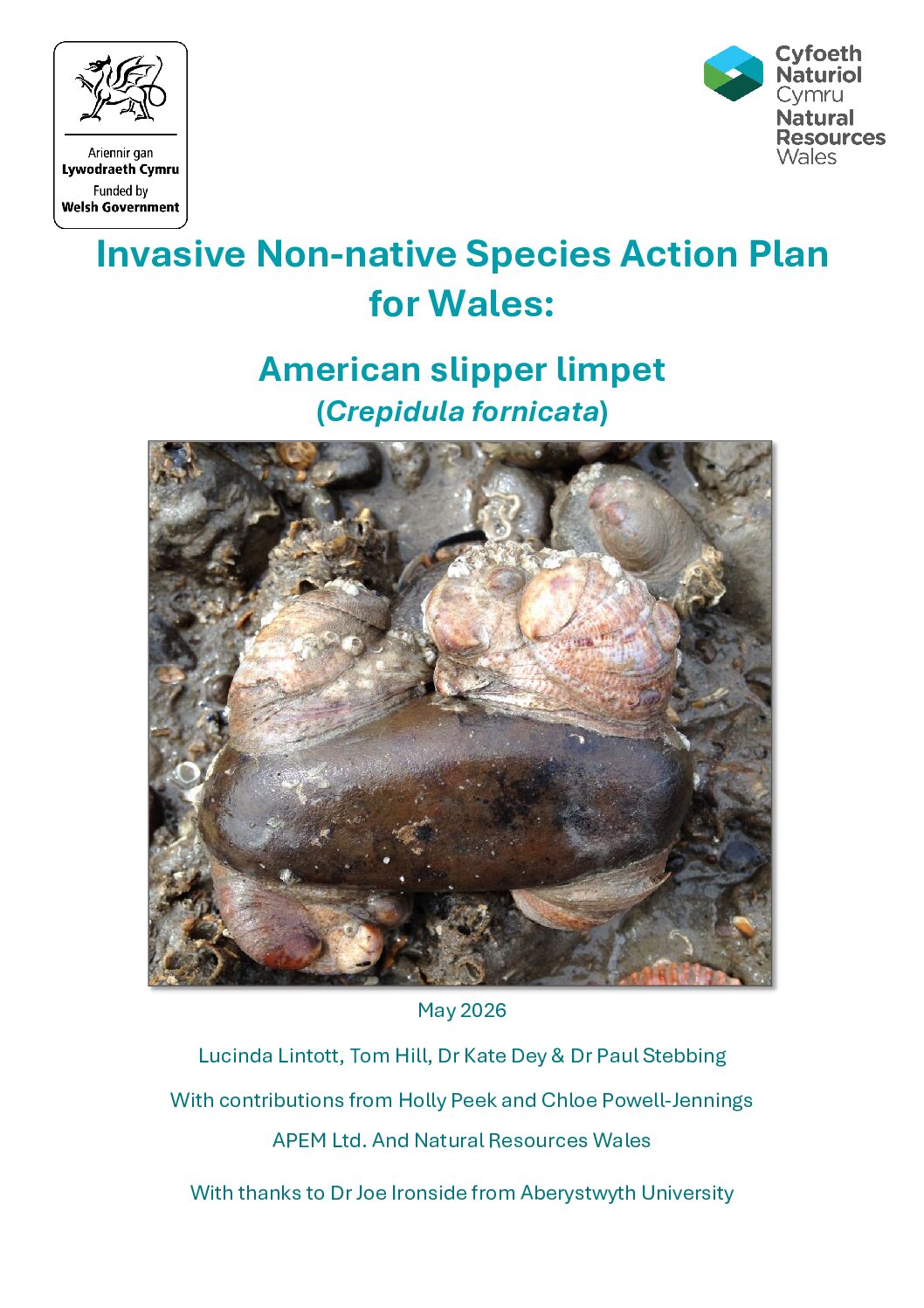
American slipper limpet, Crepidula fornicata
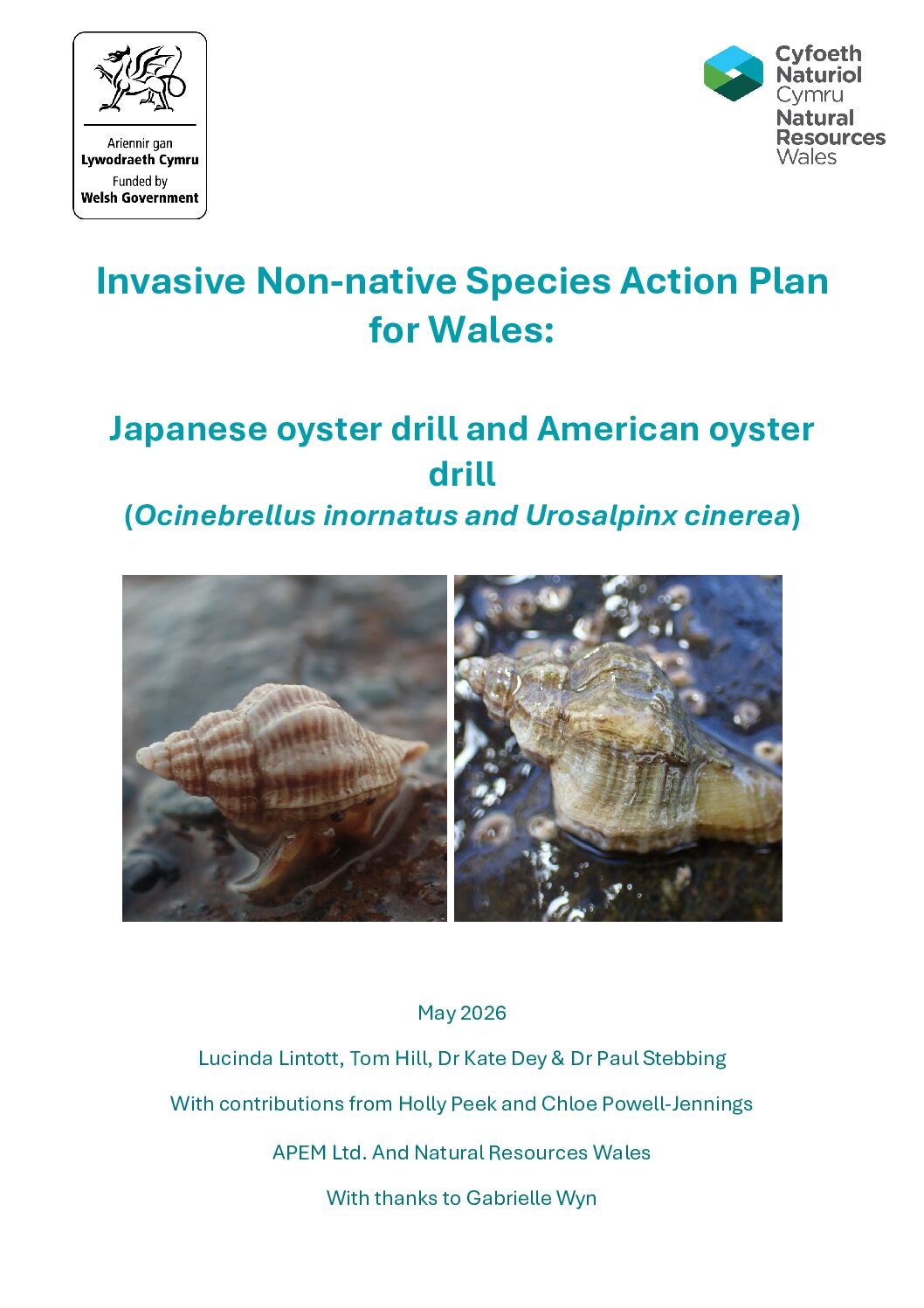
American oyster drill, Urosalpinx cinerea
Japanese oyster drill, Ocinebrellus inornatus