
Commercial Shipping
This page explains how shipping can spread INNS, how INNS affect shipping activities, the main high-risk species, and best practice guidance to reduce their introduction and spread.
You can find full details and recommended biosecurity actions, in the Commercial Shipping Pathway Action Plan for Wales.
About the pathway
Commercial shipping is important for maintaining the movement of goods and supporting international trade, with over 80% of global trade (by volume) carried by sea (according to UN Trade and Development).
INNS can be spread through:
- Biofouling on the hulls of vessels and hard to reach areas
- Ballast water and ballast sediment
- Internal tank biofouling
- Being caught up in vessel mechanisms (e.g., propellers, anchors, anchor chains)
Biofouling
Biofouling (or biological fouling) is the build-up and growth of organisms (plants, animals, bacteria and detritus), including INNS, on underwater surfaces. Common biofouling organisms include sea squirts, barnacles and sponges.
Biofouling can quickly build-up if a vessel is left in the same place in the water for weeks or longer. If the vessel is then moved or travels to a different location without first being cleaned, the species that have built-up on the boat can then spread to this new location. Even vessels with antifouling paints or coatings are at risk of INNS fouling because some INNS are resistant to the effects of antifouling coatings.
Cleaning fouled vessels in the water, or cleaning ashore where debris is washed straight back into the sea, may also allow INNS to survive and establish in the area. Fragments and larvae could be transported to new areas with the tides and currents. Cleaning vessels out of the water may be particularly difficult for large vessels, regular maintenance and application of antifouling are therefore key. See the best practice below for more information.

Hard to reach areas where biofouling can accumulate.
Source: Ministry for Primary Industries and licensed by MPI for re-use under the Creative Commons Attribution 4.0 International licence.
Ballast water and sediment
Ballast water is taken up and stored in ballast tanks onboard vessels to stabilise them while underway. Until recently this water was released, without restrictions, at the destination port along with any organisms or propagules (eggs or fragments) that had been taken up at the source port.
The Ballast Water Management Convention (BWMC, see Policy and Legislation page) came into effect in 2022 and means that ballast water from applicable vessels must either be exchanged (i.e. replaced) in designated areas offshore or treated to remove or kill any organisms that may be present. Ballast water can also be managed port-side where it is removed, treated in port-side facilities and either returned to the vessel or released into the sea.
When ballast water is brought onboard, any sediments that are suspended in the water are taken up as well. Once in the ballast tanks, these sediments settle to the bottom of the tank. Although conditions may not be favourable for the survival of many species (due to darkness and changes in water temperature) the sediment may provide a habitat for some of the organisms that survive. The removal and proper disposal of ballast sediment is therefore also included in the BWMC and provisions must be made for facilities at the destination port.

Tugboat discharging ballast water
Source: W.carter, CC0, via Wikimedia Commons
Internal biofouling and equipment
Internal tanks and pipes which may not typically be treated with any antifouling coating, can be fouled by organisms.
INNS can live on equipment that is periodically used in the water (e.g., chains, anchors, fenders, ropes and tenders). Equipment that is brought aboard and left damp on the deck or stowed away in anchor lockers can also provide a surface on which INNS can survive and then be spread to a new area when the equipment is used again.
How do INNS impact commercial shipping?
Increased drag and reduced efficiency: On vessel hulls, high densities of biofouling can result in increased drag when underway, meaning higher fuel needs and costs for cleaning. The International Maritime Organisation estimates that biofouling can increase fuel use by up to 40%, resulting in a considerable increase to an operator’s carbon footprint and costs.
Damage to vessels: Some INNS, like the trumpet tubeworm, can cement themselves to hulls and submerged metal vessel parts, and block in-flow/out-flow pipes, requiring time-consuming and costly removal. Removing such hard fouling species can cause significant damage to paints, coatings and hard structures, such as the hull or propellers.
Increased infrastructure maintenance costs: High densities of INNS in ports and harbours can result in the need for increases in cleaning and maintenance which may incur significant costs for harbour authorities.
Denial of entry to ports: It is possible that applicable vessels that aren’t compliant with the BWMC will be denied entry to a port and/or instructed to bear the cost of port-side ballast water treatment.
Example INNS relevant to commercial shipping
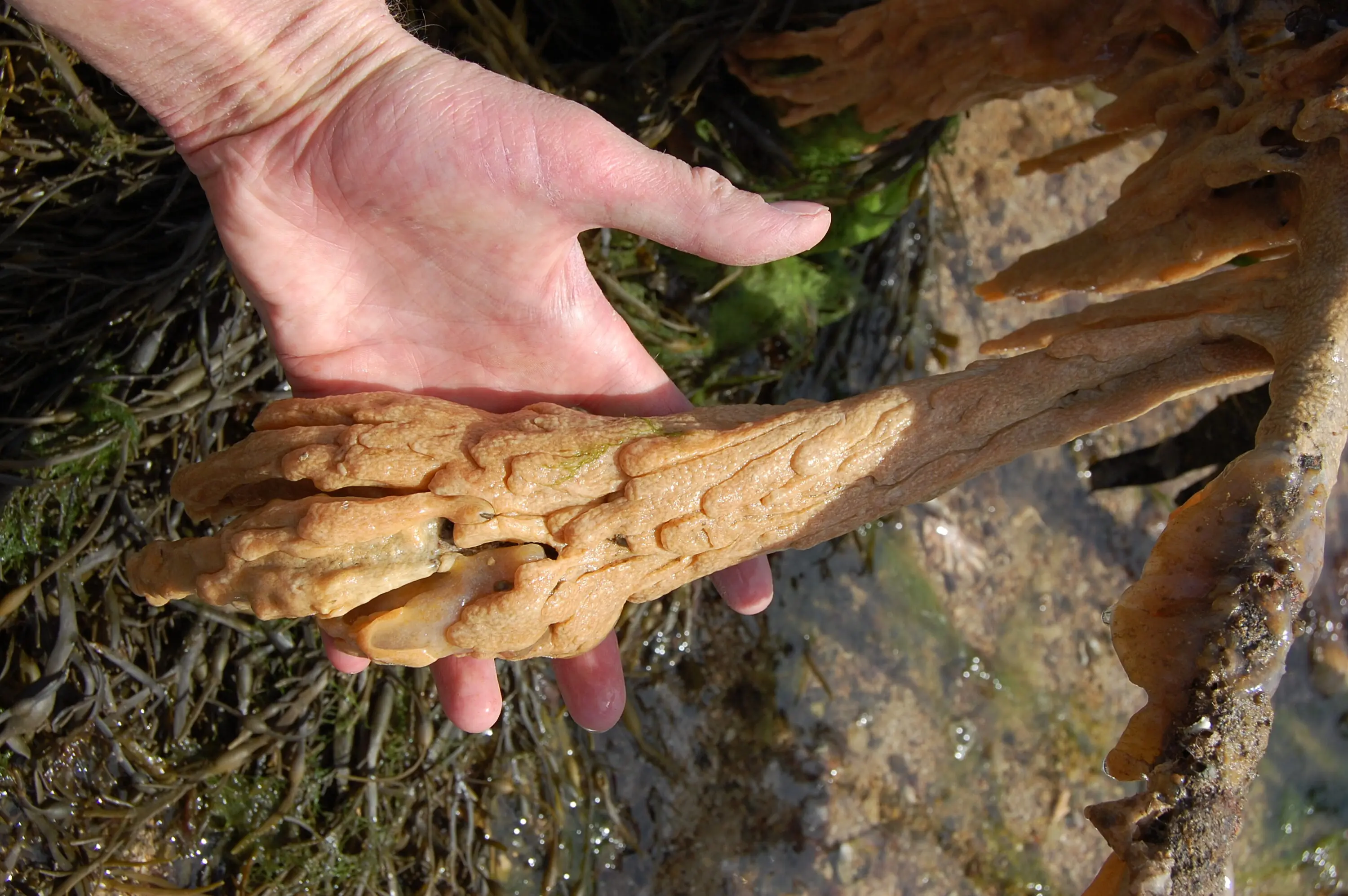
Carpet sea squirt
(Didemnum vexillum)
How they spread:
- Can break into fragments that can be transported by tides and currents, which can then reattach and regrow elsewhere, these fragments can survive for up to 30 days.
- Attach to boat hulls, marina structures and farmed shellfish which when moved can cause it to spread.
- Fragments can survive in water-retaining features of boats and equipment, which means they can be introduced to new areas if they aren’t properly cleaned before being used in a new area.
Why they are a problem:
- Smother native species and farmed shellfish, causing loss of biodiversity and commercial profit.
- Foul equipment, boats and infrastructure, increasing cleaning costs and time.
- Change natural seabed habitats, which can impact our native species.
For more information see the GB NNSS Information Portal and NBN Atlas. A link to the Species Action Plan can be found here.
–
📸 © Carpet sea squirt – Joe Ironside
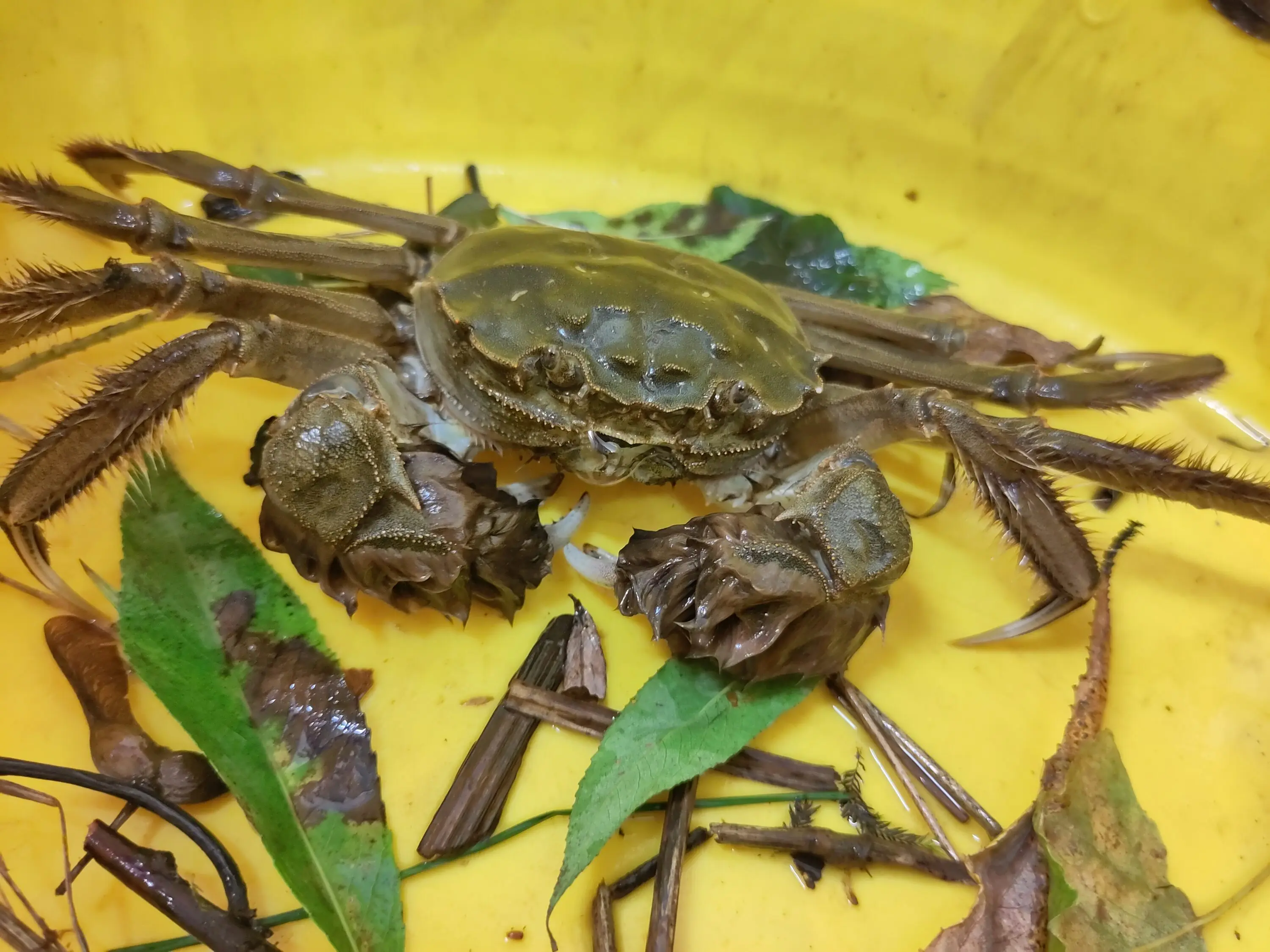
Chinese mitten crab
(Eriocheir sinensis)
How they spread:
- Female crabs can lay between 250,000 and 1 million eggs, the newly hatched young (larvae) float freely in the water for up to two months before they settle and develop into the typical crab form.
- Young (larvae) and juveniles can be transported in ballast, hopper and bilge water.
- The young (larvae) can also be transported by tides and currents.
- Juveniles can hide among other fouling species.
- Can tolerate a wide range of environmental conditions, including highly polluted waters, increasing the number of potential sites for them to colonise.
- Can also travel long distances (recorded up to 1,500km) on their own and climb obstacles.
Why they are a problem:
- Burrow into riverbanks, causing erosion and increasing flooding risk.
- Compete with and eat native species.
- Cause problems for fisheries by damaging nets and eating catch.
- Block pipes and damage infrastructure.
- Crabs spend 2-5 years in freshwater and migrate to estuarine and marine environments in the autumn to breed. Once the young (larvae) start to develop into juveniles they migrate back upstream, eventually reaching freshwater as adults. Having different life stages that require both freshwater and marine to complete their lifecycle means they can potentially impact lots of different vulnerable species and habitats.
For more information see the GB NNSS Information Portal and NBN Atlas. A link to the Species Action Plan can be found here.
–
📸 © Chinese mitten crab – Chloe Powell Jennings
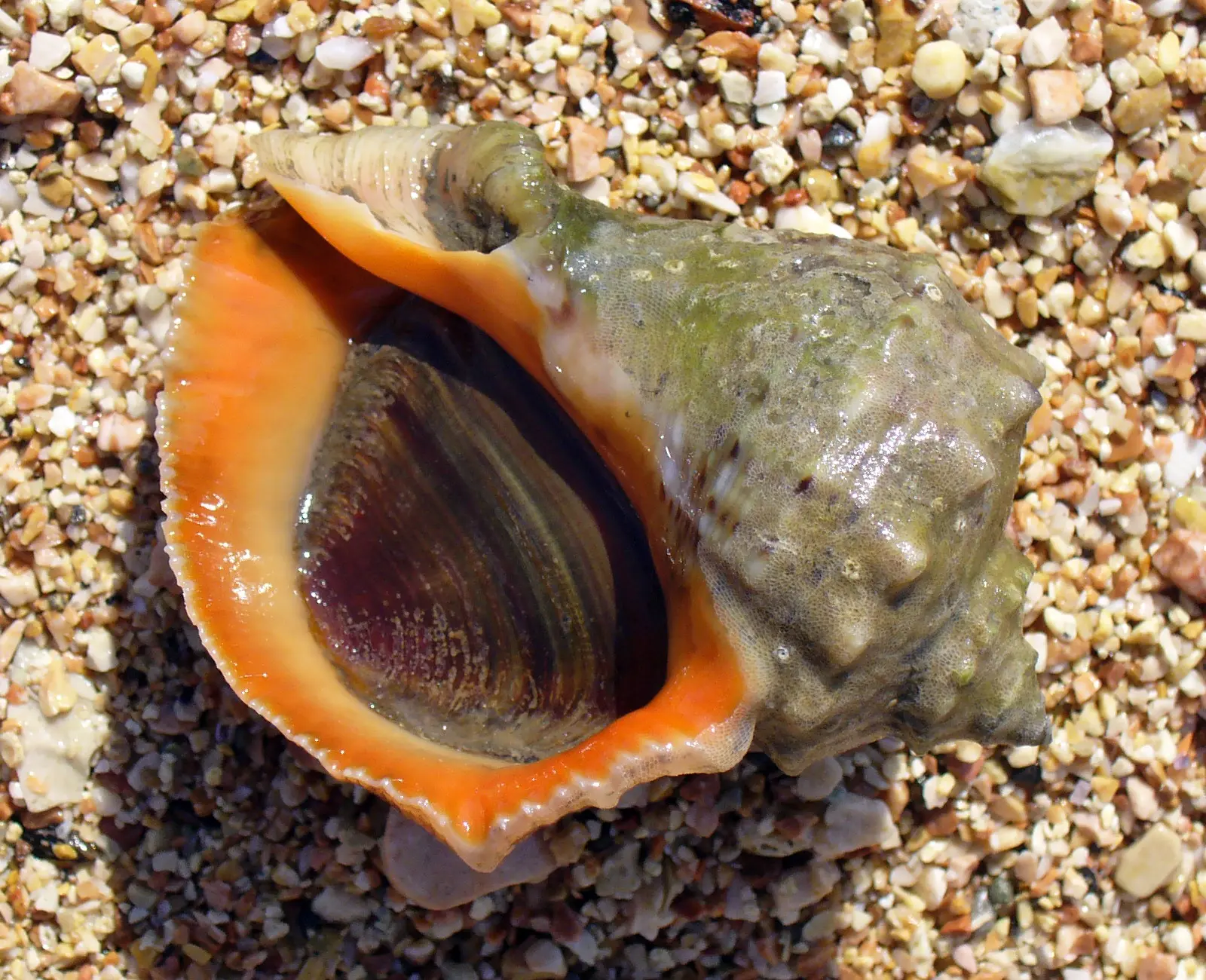
Veined rapa whelk
(Rapana venosa)
Horizon Species
How they spread:
- The young (larvae) float freely in the water for 24-80 days and so can be transported in ballast and bilge water as well as the water transported with farmed shellfish during this time.
- The young (larvae) can also be transported by tides and currents.
Why they are a problem:
- They are voracious predators of oysters and mussels and other native shellfish.
- They can cause significant economic damage to shellfish industries.
For more information, see the GB NNSS Information Portal and the NBN Atlas.
–
📸 © Veined rapa whelk – Amgueddfa Cymru
See Policy and Legislation page for information on INNS, commercial shipping and the law.
Best practice for vessel operators:
✅ Adhere to ballast water regulations as outlined in the Merchant Shipping (Control and Management of Ships’ Ballast Water and Sediments) Regulations 2022
✅ Adhere to International Maritime Organization (IMO) biofouling guidelines
✅ Ensure that antifouling treatment on vessel hulls and submerged surfaces is maintained and renewed as appropriate, adhering to Merchant Shipping (Anti-Fouling Systems) Regulations 2024
✅ Check vessel fouling regularly and remove as necessary, ensuring that debris is collected and does not re-enter the water
Best practice for port authorities and operators:
✅ Remove any unused structures and equipment from the water (e.g., buoys, ropes, fenders, warps, moorings and any derelict infrastructure)
✅ Ensure that antifouling treatment is maintained on submerged infrastructure where appropriate
✅ Clean and dry infrastructure and equipment before they are introduced into, moved within, or moved off site. If possible, clean removable structures and equipment on land, ensuring that wastewater and debris does not re-enter the water
✅ Make the most of any natural flows of freshwater into your site. Expose INNS to fresh water through immersion or wash down
See Marine Biosecurity Action Plan for Wales for information on the seven main areas of biosecurity that cover all pathways in Welsh seas. Click here for useful links and resources.