
Fishing (shore-based and boat-based)
This page explains how fishing can spread INNS, how INNS affect fishing activities, the main high-risk species, and best practice guidance to reduce their introduction and spread.
You can find full details and recommended biosecurity actions, in the Fishing Pathway Action Plan for Wales (shore-based fishing) and (boat-based fishing).
About the pathway
Boat-based fishing
Biofouling (or biological fouling) is the build-up and growth of organisms (plants, animals, bacteria and detritus), including INNS, on underwater surfaces. Common biofouling organisms include sea squirts, barnacles and sponges.
INNS can be spread through:
- Biofouling on, or entanglement in fishing equipment (e.g., pots, rope, nets etc)
- Biofouling on boat hulls, surfaces and niche areas (e.g., boat propellers, anchors and pipes)
- Discard of non-native bycatch (e.g., when processing underway)

Biofouling can quickly build-up if a boat is left in the same place in the water for weeks or longer. If the boat is then moved or travels to a different location without first being cleaned, the species that have built-up on the boat can then spread to this new location. Even boats with antifouling paints or coatings are at risk of INNS fouling because some INNS are resistant to the effects of antifouling coatings.
Cleaning fouled boats in the water, or cleaning ashore where debris is washed straight back into the sea, may also allow INNS to survive and establish in the area. Fragments could be transported to new areas with the tides and currents.
Discarding non-native bycatch away from the site it was fished from can spread INNS. For example, processing catch while underway and discarding INNS (e.g. American slipper limpets) overboard that have been brought up attached to target species (e.g. scallops or whelks). Some bycatch INNS may also remain on the boat and be swept overboard into the landing port waters when the boat deck is cleaned. These discarded INNS may be able to establish in the receiving area, or may contain eggs and larvae that survive, grow and eventually establish.
See the Boat-based Fishing Pathway Action Plan for more information.
Shore-based fishing
INNS can be spread through:
- Becoming entangled/attached to equipment and clothing
- Fishing gear (rod, lines, nets and rakes) and clothing (e.g., waders and boots) can become covered in INNS
- Absorbent materials such as nets, clothing and personal protective equipment can transfer tiny larvae, eggs and spores which can survive for days/weeks in damp conditions
- INNS growing on immersed stationary fishing gear
- The use of live INNS (or dead INNS carrying eggs) as bait
INNS can be transferred between locations, especially when multiple fishing grounds are visited within the same few days or weeks. If live INNS (e.g. American slipper limpet) are used as fishing bait, there is the risk of their escape/release, or, if bait has only been recently killed, any eggs that it may be carrying could be released. Organisms can also be spread in or on the packing materials transported with bait, for example, INNS can be attached to seaweed or in mud, making them difficult to spot.
See the Shore-based Fishing Pathway Action Plan for more information.
How do INNS impact fishing operations?
- Competition for resources:
INNS can compete for space and food with native fishery species. This can lead to a decrease in the numbers of native fish, shellfish and bait worms and could result in a loss of business for fishing boat companies or owners.
- Entanglement and reduced access:
INNS can increase levels of bycatch, become entangled in fishing gear and make fishing areas less accessible. Chinese mitten crabs are known to take bait from fishing lines, as well as heavily predating on target catch species.
- Increased drag, obstruction and boat damage:
On boat hulls, high densities of biofouling can result in increased drag when underway, meaning higher fuel, cleaning and antifouling costs. Some INNS, like the trumpet tubeworm, can cement themselves to hulls and submerged metal boat parts requiring time-consuming and costly removal. Removing hard fouling species can also cause damage to paints, coatings and the surface itself.
- Costs and movement restrictions:
Increased cleaning and maintenance of marinas and harbours may be required if there is a high density of INNS. This could result in costs being passed from marina management to boats owners (e.g., in enhanced berthing / mooring fees or memberships). Heavily fouled boats may be refused entry; restricting movements.
- Disease:
INNS can spread disease to native species. For example, the American lobster can carry a bacteria that causes red tail disease (also known as Gaffkaemia). This disease particularly affects the native European lobster and can result in significant mortalities.
- Habitat alterations:
INNS can alter habitats in ways that make them unsuitable for the survival of native species. For example, the carpet sea squirt can smother gravel beds used by fish species such as Atlantic herring, which may inhibit egg laying and ultimately reduce adult numbers.

Stack of slipper limpets attached to whelk – Charlotte Colvin

Japanese wireweed covering lobster pot – Andy Riches
Example INNS relevant to fishing
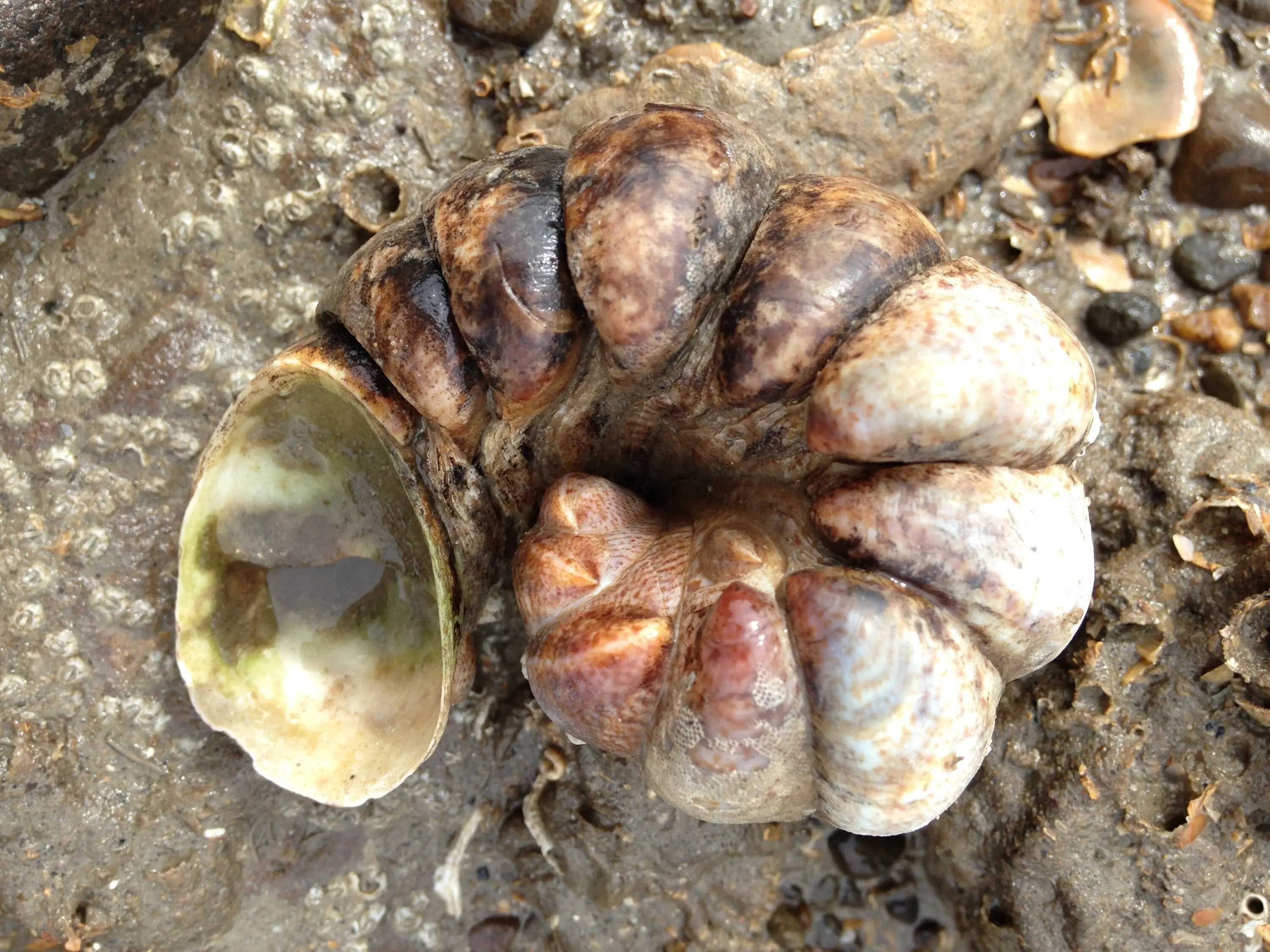
American slipper limpet
(Crepidula fornicata)
How they spread:
- The young (larvae) swim in the water for around five weeks and so can be transported in ballast and bilge water as well as the water transported with farmed shellfish.
- The young (larvae) can also be transported by tides and currents.
- Attach to shellfish, boats and fishing gear which when moved can cause it to spread.
- Moved in dredged sediment.
- Moved as fishing bait.
Why they are a problem:
- Create dense mats that smother other species.
- Overcrowd and outcompete native species.
- Alter the seabed and reduce space for native shellfish larvae to settle and for fish to spawn.
For more information see the GB NNSS Information Portal and NBN Atlas. A link to the Species Action Plan can be found here.
–
📸 © American slipper limpet, Swansea Bay – Chloe Powell Jennings
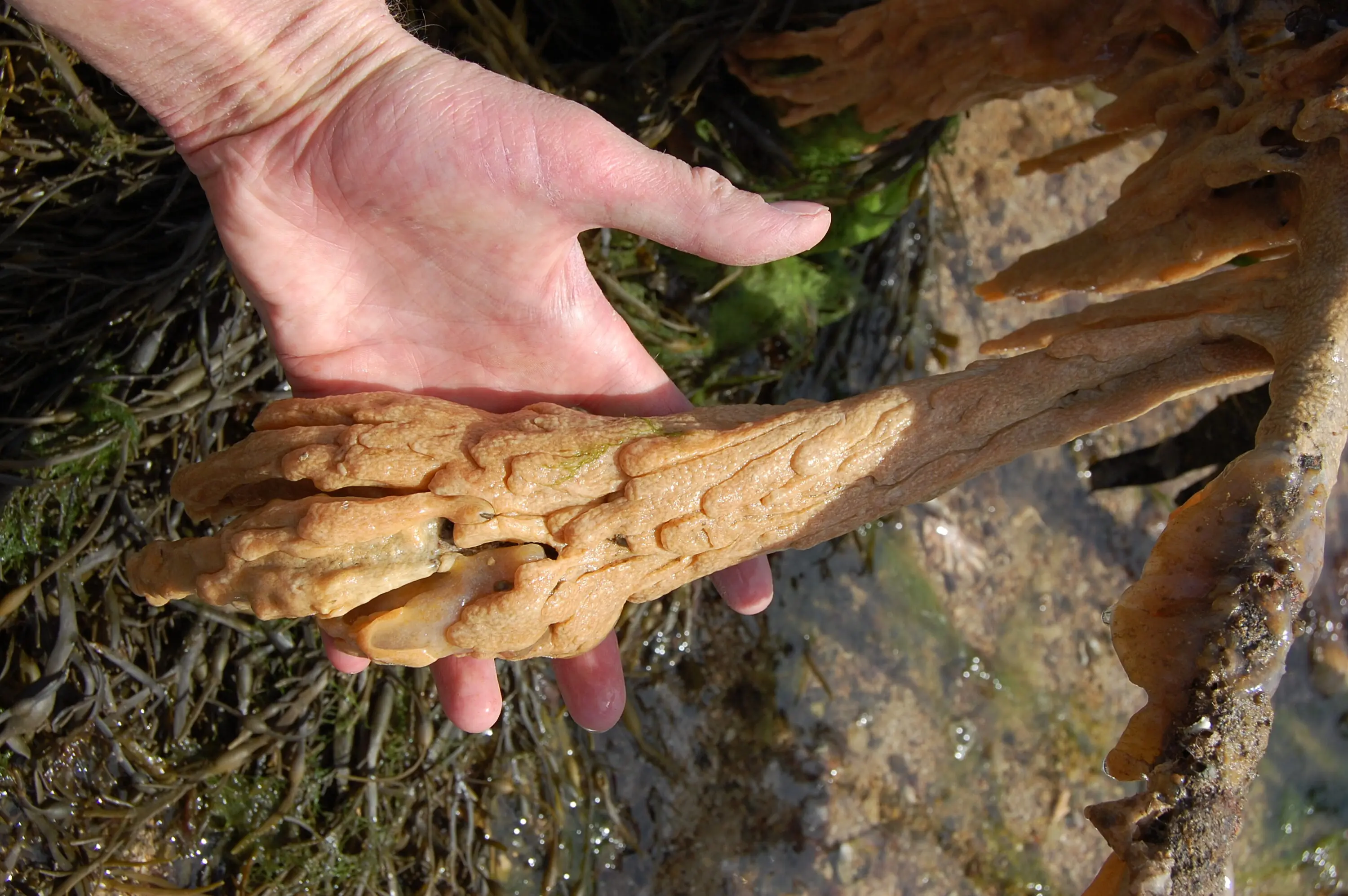
Carpet sea squirt
(Didemnum vexillum)
How they spread:
- Can break into fragments that can be transported by tides and currents, which can then reattach and regrow elsewhere, these fragments can survive for up to 30 days.
- Attach to boat hulls, marina structures and farmed shellfish which when moved can cause it to spread.
- Fragments can survive in water-retaining features of boats and equipment, which means they can be introduced to new areas if they aren’t properly cleaned before being used in a new area.
Why they are a problem:
- Smother native species and farmed shellfish, causing loss of biodiversity and commercial profit.
- Foul equipment, boats and infrastructure, increasing cleaning costs and time.
- Change natural seabed habitats, which can impact our native species.
For more information see the GB NNSS Information Portal and NBN Atlas. A link to the Species Action Plan can be found here.
–
📸 © Carpet sea squirt – Joe Ironside
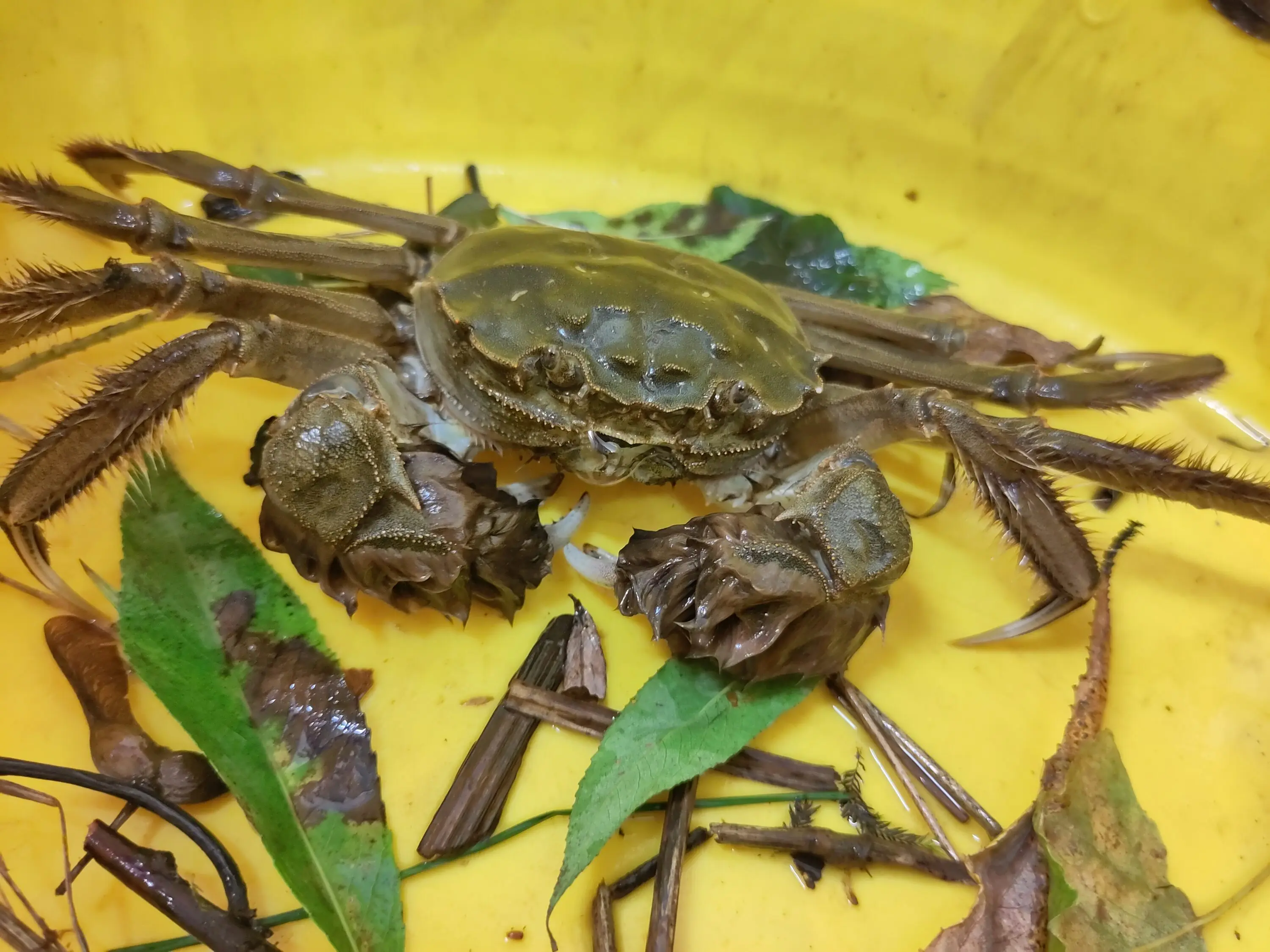
Chinese mitten crab
(Eriocheir sinensis)
How they spread:
- Female crabs can lay between 250,000 and 1 million eggs, the newly hatched young (larvae) float freely in the water for up to two months before they settle and develop into the typical crab form.
- Young (larvae) and juveniles can be transported in ballast, hopper and bilge water.
- The young (larvae) can also be transported by tides and currents.
- Juveniles can hide among other fouling species.
- Can tolerate a wide range of environmental conditions, including highly polluted waters, increasing the number of potential sites for them to colonise.
- Can also travel long distances (recorded up to 1,500km) on their own and climb obstacles.
Why they are a problem:
- Burrow into riverbanks, causing erosion and increasing flooding risk.
- Compete with and eat native species.
- Cause problems for fisheries by damaging nets and eating catch.
- Block pipes and damage infrastructure.
- Crabs spend 2-5 years in freshwater and migrate to estuarine and marine environments in the autumn to breed. Once the young (larvae) start to develop into juveniles they migrate back upstream, eventually reaching freshwater as adults. Having different life stages that require both freshwater and marine to complete their lifecycle means they can potentially impact lots of different vulnerable species and habitats.
For more information see the GB NNSS Information Portal and NBN Atlas. A link to the Species Action Plan can be found here.
–
📸 © Chinese mitten crab – Chloe Powell Jennings
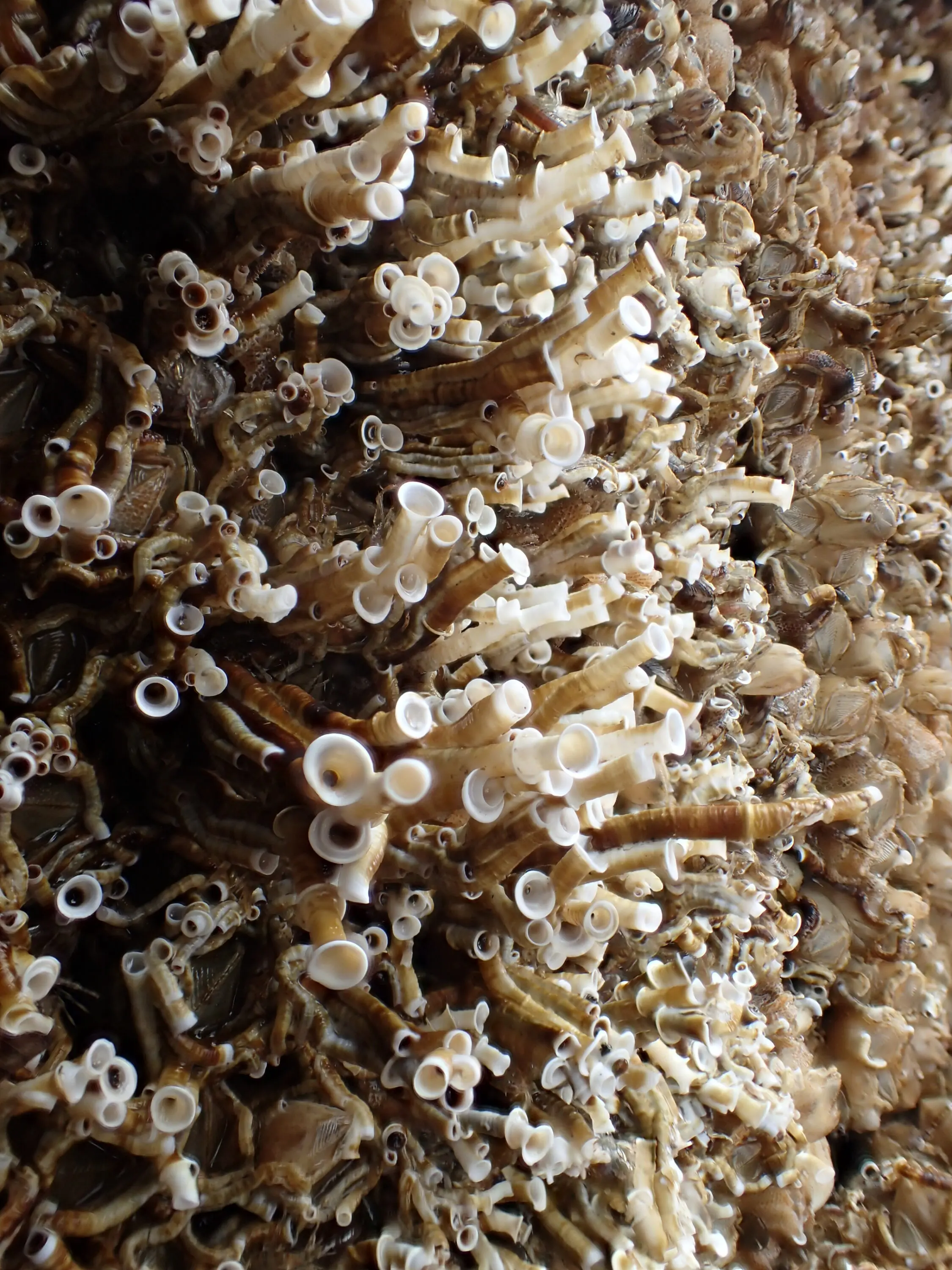
Trumpet tubeworm
(Ficopomatus enigmaticus)
How they spread:
- The young (larvae) float freely in the water for 1-3 months and so can be transported through ballast and bilge water during this time.
- Adults attach to boat hulls, equipment, structures and shellfish which when moved can cause it to spread.
- Tolerant of a wide range of environments, including areas where there is large freshwater input, such as marinas.
- The young (larvae) can also be transported by tides and currents.
Why they are a problem:
- Dense growth can form large reeflike structures that alter habitats.
- Block pipes and foul boats, equipment and structures – causing costly maintenance and cleaning.
- Heavy fouling can be heavy enough to sink pontoons and small boats.
- Outcompete native species.
- Resistant to antifouling paint, making it difficult to prevent it attaching to boats.
For more information see the GB NNSS Information Portal and NBN Atlas. A link to the Species Action Plan can be found here.
–
📸 © Trumpet tubeworm – Paul Brazier, Natural Resources Wales
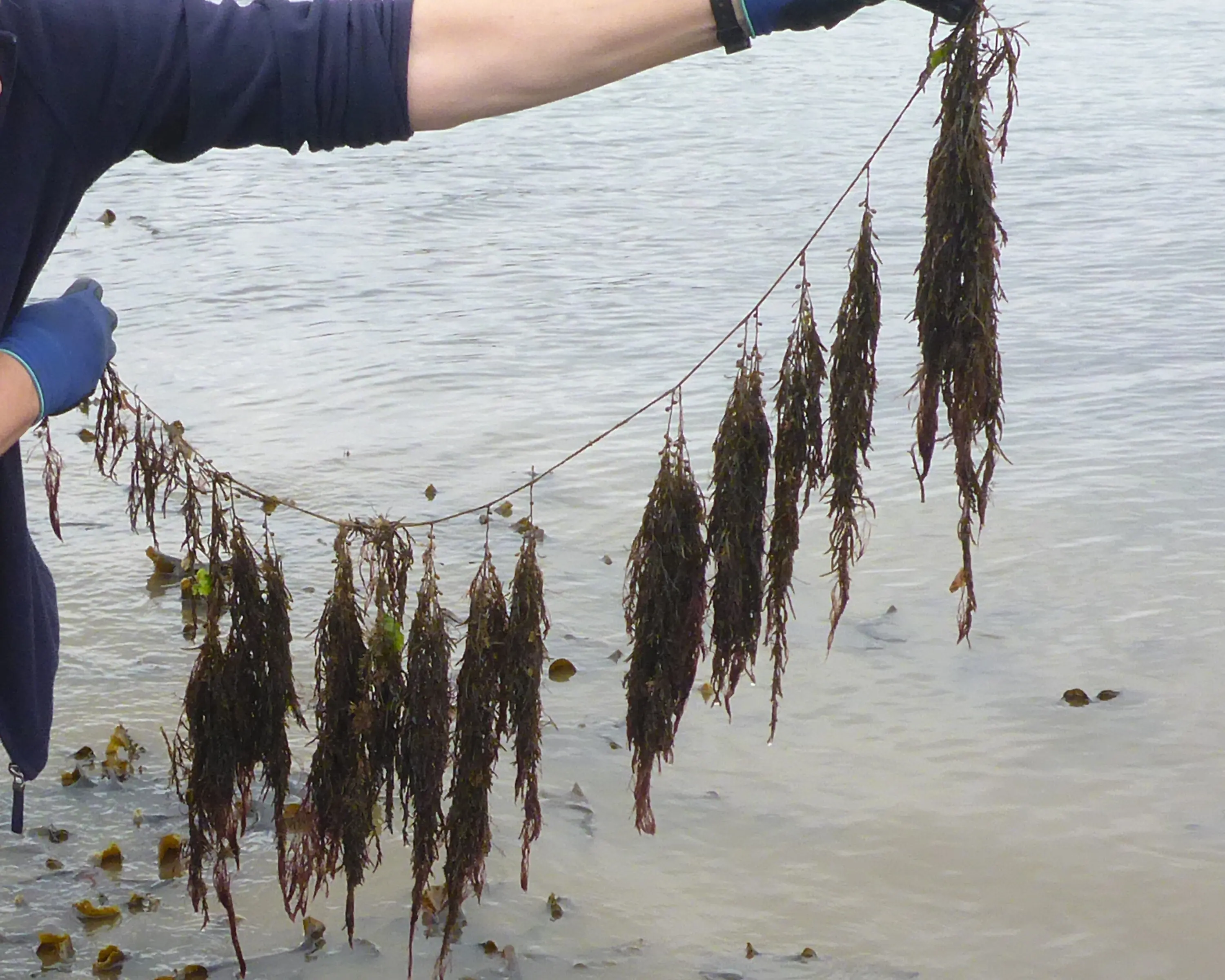
Japanese wireweed
(Sargassum muticum)
How they spread:
- Can break into fragments which can survive for up to three months.
- Fragments can survive in water-retaining features of boats and equipment, which means they can be introduced to new areas if they’re not properly cleaned before being used in a new area.
- Strands and fragments can become caught in propellers and other gear.
- Fragments can also be transported by tides and currents.
Why they are a problem:
- Form large floating mats that block waterways and smother beaches.
- Become tangled in propellers and fishing gear, causing a nuisance to the user and damage to gear.
- Overgrow and outcompete native seaweeds and important habitats such as seagrass.
For more information see the GB NNSS Information Portal and NBN Atlas.
–
📸 © Japanese wireweed – John Bishop (MBA)
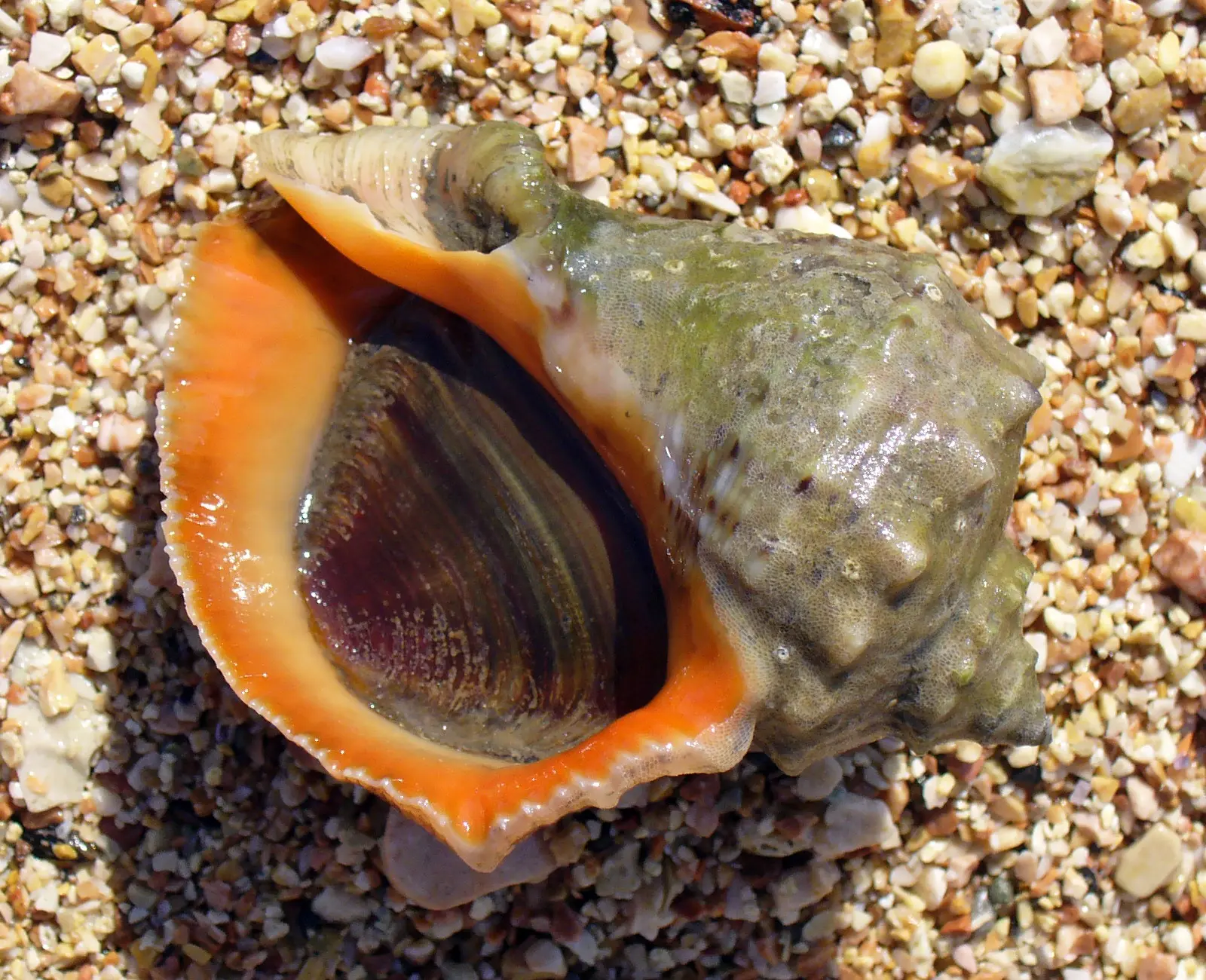
Veined rapa whelk
(Rapana venosa)
Horizon Species
How they spread:
- The young (larvae) float freely in the water for 24-80 days and so can be transported in ballast and bilge water as well as the water transported with farmed shellfish during this time.
- The young (larvae) can also be transported by tides and currents.
Why they are a problem:
- They are voracious predators of oysters and mussels and other native shellfish.
- They can cause significant economic damage to shellfish industries.
For more information, see the GB NNSS Information Portal and the NBN Atlas.
–
📸 © Veined rapa whelk – Amgueddfa Cymru
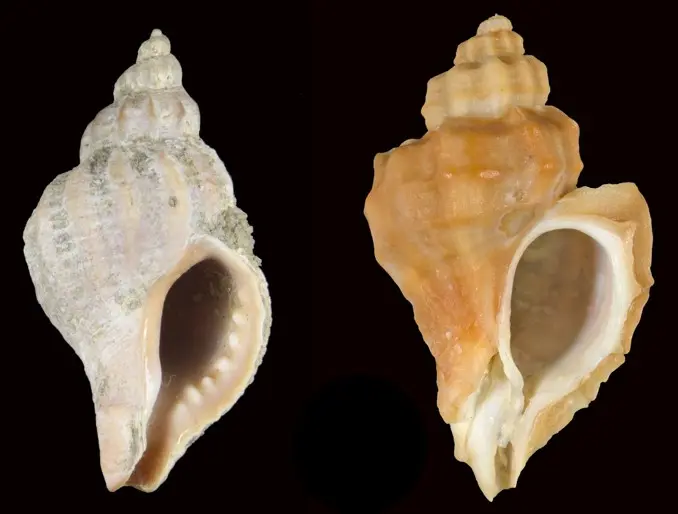
American & Japanese oyster drills
(Urosalpinx cinerea & Ocinebrellus inornatus)
Horizon Species
How they spread:
- The eggs and juveniles attach to shellfish and can be moved with stock to a new site.
- Because there is no larval stage, spread through currents and tides is minimal.
Why they are a problem:
- They are voracious predators of oysters and mussels and other native shellfish.
- They can cause significant economic damage to shellfish industries.
For more information on the American oyster drill see the GB NNSS Information Portal and NBN Atlas. For more information on the Japanese oyster drill see the GB NNSS Information Portal and NBN Atlas. A link to the Species Action Plan can be found here.
–
📸 © American and Japanese oyster drills – Amgueddfa Cymru
See Policy and Legislation page for information on INNS, pathways and the law.
Best practice for commercial fishers:
✅ Avoid using non-native species as bait
✅ Avoid discarding unwanted catch back into the sea away from where it was caught (e.g. cleaning decks while underway). If it is suspected that an INNS is within the unwanted catch – dispose of it appropriately on land
✅ Ensure that nets, broken pots or other debris are not discarded or left in the water as this can facilitate the transport of INNS. Dispose of this equipment appropriately on land
✅ Wash down equipment into the same water body or wash down well away from the water’s edge. For example, if you haul and clean your creels either wash them down in the area they have been hauled from or onshore away from the water’s edge where no residues can return to the sea
✅ Use either a waste-capture washdown facility when your boat is hauled out or wash your boat as far away from the water’s edge as you can, well above the high-water line, and make sure wastewater and debris does not enter back into the sea
Best practice for anglers:
✅ Avoid using non-native species as bait
✅ Ensure that all equipment and clothing is cleaned and dried before and after use
✅ If equipment is being used abroad, ensure that it is clean and dry before travelling between locations
See Marine Biosecurity Action Plan for Wales for information on the seven main areas of biosecurity that cover all pathways in Welsh seas. Click here for useful links and resources.

Fishing off the rocks at Mwnt Beach – Chloe Powell Jennings