
Aquaculture
This page explains how aquaculture can spread INNS, how INNS affect aquaculture, the main high-risk species, and best practice guidance to reduce their introduction and spread.
You can find full details with suggested biosecurity actions, in the Aquaculture Pathway Action Plan for Wales.
About the pathway
Aquaculture refers to the farming of aquatic organisms, such as fish, shellfish, and seaweed, for food, recreation, and scientific purposes. It is a key seafood production sector in Welsh seas.
Biofouling (or biological fouling) is the build-up and growth of organisms (plants, animals, bacteria and detritus), including INNS, on underwater surfaces. Common biofouling organisms include sea squirts, barnacles and sponges.
Biofouling can quickly build-up if equipment and other underwater surfaces are left in the same place in the water for weeks or longer.
INNS can be spread through:
- Biofouling on aquaculture equipment and materials (including boats, trestles, tractors and packing materials)
- Attaching onto stock then moved between sites
- Being transferred in water along with stock
- Escapes of stock (if an INNS)
- Staff movement between sites (e.g., fouled/contaminated staff boots, waders, dry suits and buoyancy aids and vehicles)
The movement of fouled equipment between sites can risk spreading INNS to a new location. If equipment doesn’t move beyond the cultivation site, the biosecurity risk is reduced but biofouling can still be a source of INNS which could then spread beyond the cultivation site through natural means (i.e. on ocean currents).
Movement of shellfish (and packaging materials and water) fouled or contaminated with INNS, onto and off a cultivation site could lead to the introduction / spread of INNS.
The risk of INNS introduction onto a site as a result of stock movements is likely to be reduced if the stock being moved is produced in a controlled or sterile environment.
While good practice guidance exists to reduce the biosecurity risk posed by stock movements (see Links and Resources), these practices are not infallible, due to the challenges of detecting and identifying INNS.
Though current legislation prevents the cultivation of INNS if the risk of escape into the wild cannot be managed, commercially cultivated INNS do exist as a result of historic permissions. For example, the Pacific oyster (classified as an INNS) is legally cultivated in the UK and is a commercially important species. Despite deployment of methods to reduce the risk of establishment and spread, such as the cultivation of triploid Pacific oysters, the escape of viable stock and human mediated spread remains a potential risk.

Slipper limpets attached to a mussel shell – Paul Brazier

Tractor carrying fouled oyster trestles – Joe Ironside

Rapa whelk – Amgueddfa Cymru
How do INNS impact aquaculture operations?
- Increased drag and reduced efficiency of equipment:
Biofouling on aquaculture gear adds weight and drag, which can lead to equipment damage. Biofouling on boats increases drag, making them less efficient, leading to higher fuel costs. It is estimated that 10-30% of annual aquaculture operating costs result from the cleaning and maintenance required to manage INNS. - Competition for resources:
INNS can compete with aquaculture stock for space and nutrients. INNS can reduce water flow which may impair oxygen and food supply, affecting stock health, growth and condition. - Barriers to larval settlement:
The attachment and settlement of larvae on substrate may be reduced or blocked if the substrate is fouled by INNS. This reduces the efficiency of wild spat capture and may decrease cultivation yields and profitability. - Direct impact on shellfish:
Biofouling can physically damage stock, obstruct feeding, and compromise growth and overall condition; reducing quality and marketability of the stock. Biofouling may lead to restrictions on moving stock between locations due to presence of INNS. - Predation, parasites and pathogens:
INNS can directly feed on stock or introduce pathogens and parasites, leading to mortalities and reduced stock condition.
Example INNS relevant to aquaculture
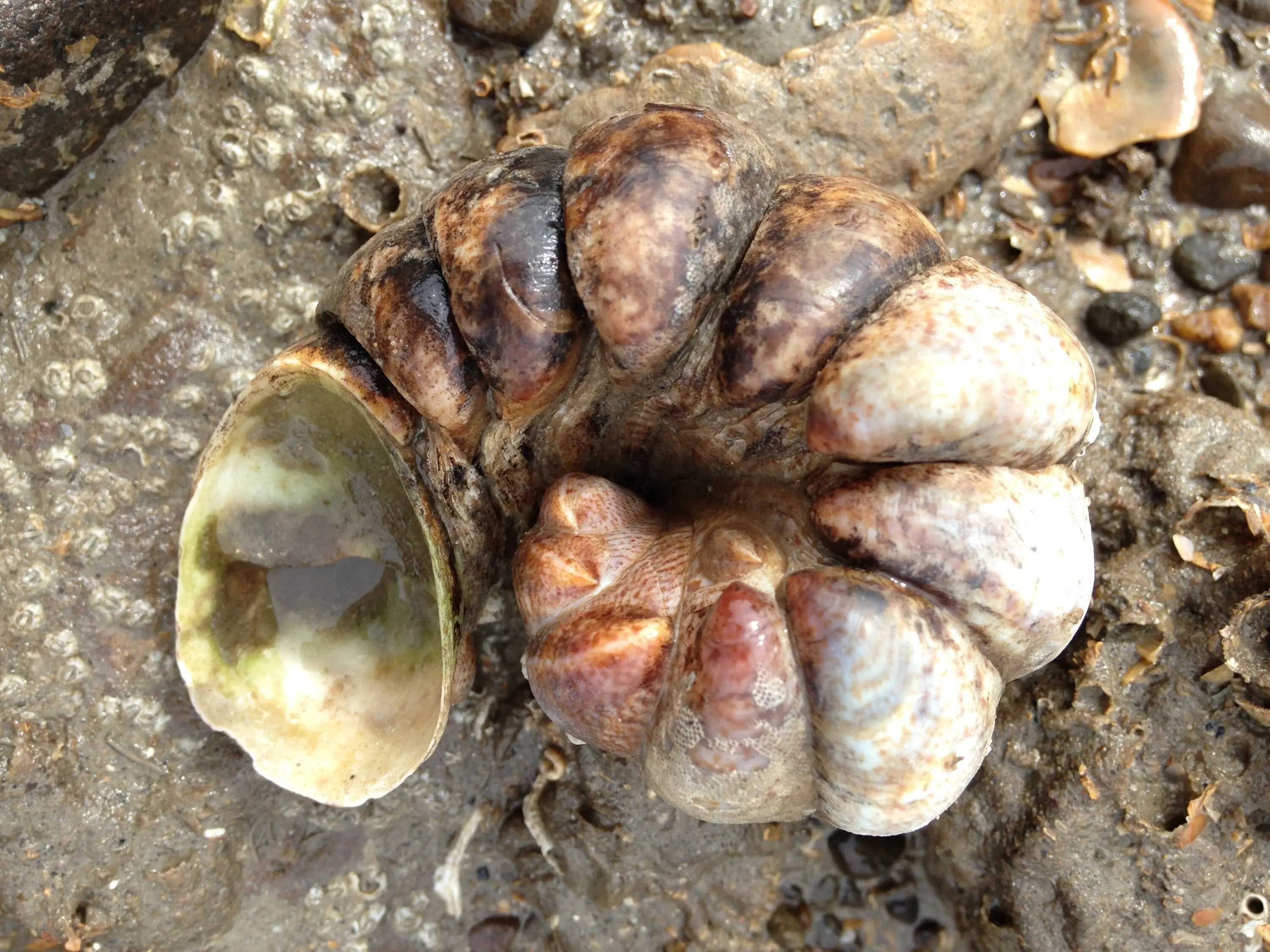
American slipper limpet
(Crepidula fornicata)
How they spread:
- The young (larvae) swim in the water for around five weeks and so can be transported in ballast and bilge water as well as the water transported with farmed shellfish.
- The young (larvae) can also be transported by tides and currents.
- Attach to shellfish, boats and fishing gear which when moved can cause it to spread.
- Moved in dredged sediment.
- Moved as fishing bait.
Why they are a problem:
- Create dense mats that smother other species.
- Overcrowd and outcompete native species.
- Alter the seabed and reduce space for native shellfish larvae to settle and for fish to spawn.
For more information see the GB NNSS Information Portal and NBN Atlas. A link to the Species Action Plan can be found here.
–
📸 © American slipper limpet, Swansea Bay – Chloe Powell Jennings
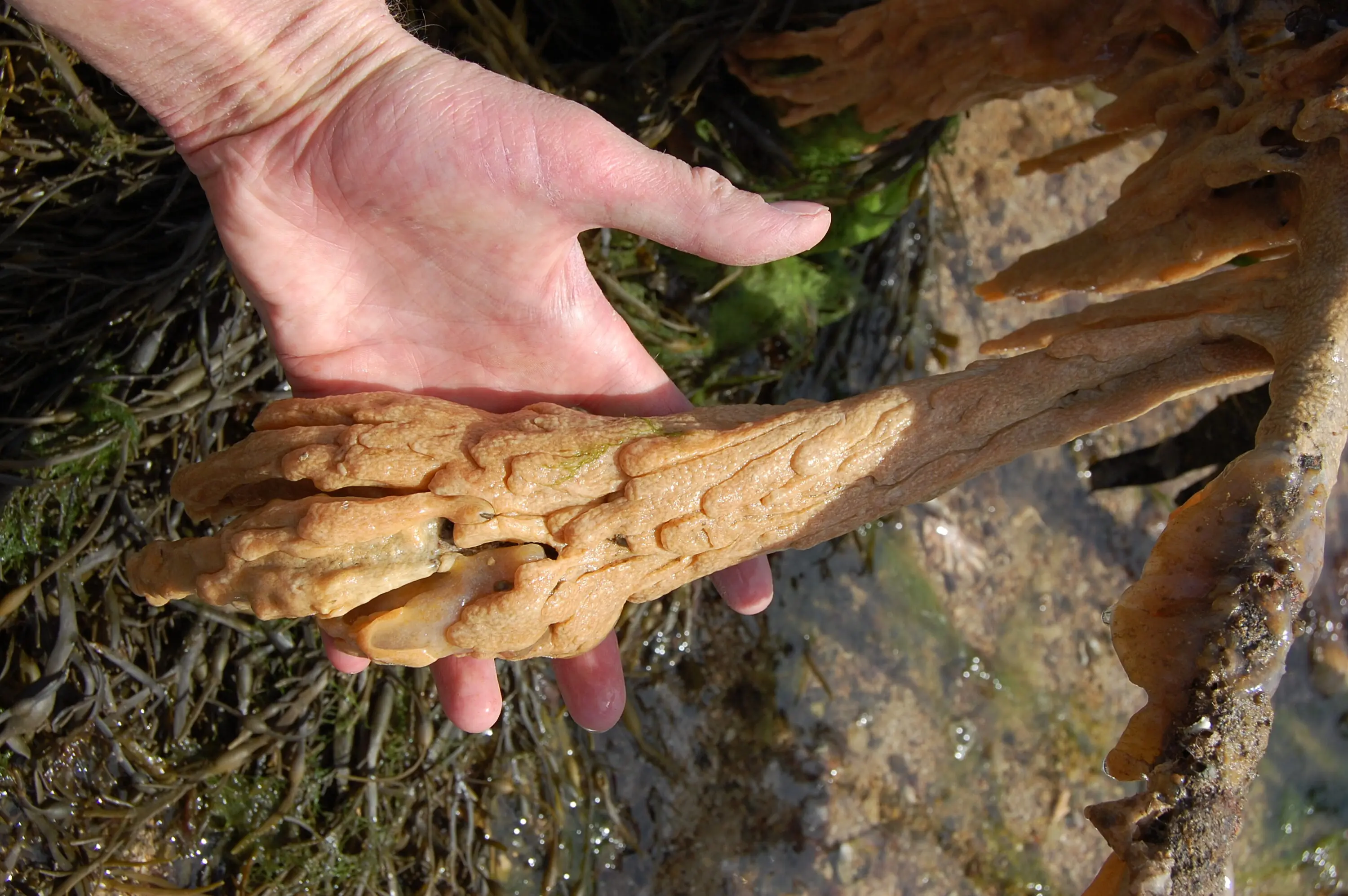
Carpet sea squirt
(Didemnum vexillum)
How they spread:
- Can break into fragments that can be transported by tides and currents, which can then reattach and regrow elsewhere, these fragments can survive for up to 30 days.
- Attach to boat hulls, marina structures and farmed shellfish which when moved can cause it to spread.
- Fragments can survive in water-retaining features of boats and equipment, which means they can be introduced to new areas if they aren’t properly cleaned before being used in a new area.
Why they are a problem:
- Smother native species and farmed shellfish, causing loss of biodiversity and commercial profit.
- Foul equipment, boats and infrastructure, increasing cleaning costs and time.
- Change natural seabed habitats, which can impact our native species.
For more information see the GB NNSS Information Portal and NBN Atlas. A link to the Species Action Plan can be found here.
–
📸 © Carpet sea squirt – Joe Ironside
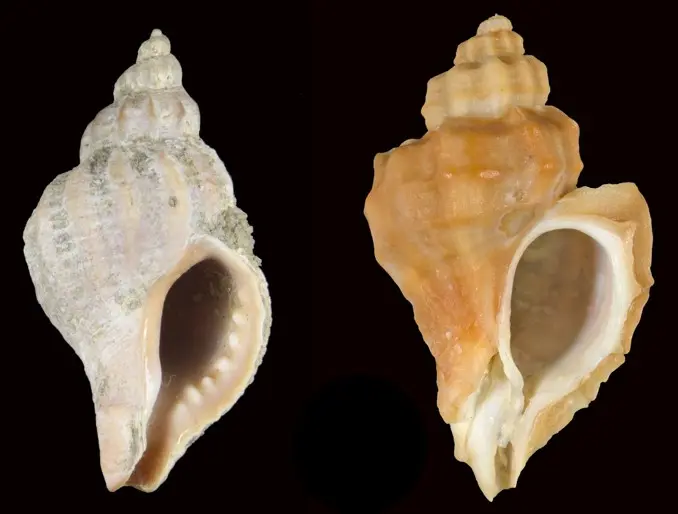
American & Japanese oyster drills
(Urosalpinx cinerea & Ocinebrellus inornatus)
Horizon Species
How they spread:
- The eggs and juveniles attach to shellfish and can be moved with stock to a new site.
- Because there is no larval stage, spread through currents and tides is minimal.
Why they are a problem:
- They are voracious predators of oysters and mussels and other native shellfish.
- They can cause significant economic damage to shellfish industries.
For more information on the American oyster drill see the GB NNSS Information Portal and NBN Atlas. For more information on the Japanese oyster drill see the GB NNSS Information Portal and NBN Atlas. A link to the Species Action Plan can be found here.
–
📸 © American and Japanese oyster drills – Amgueddfa Cymru
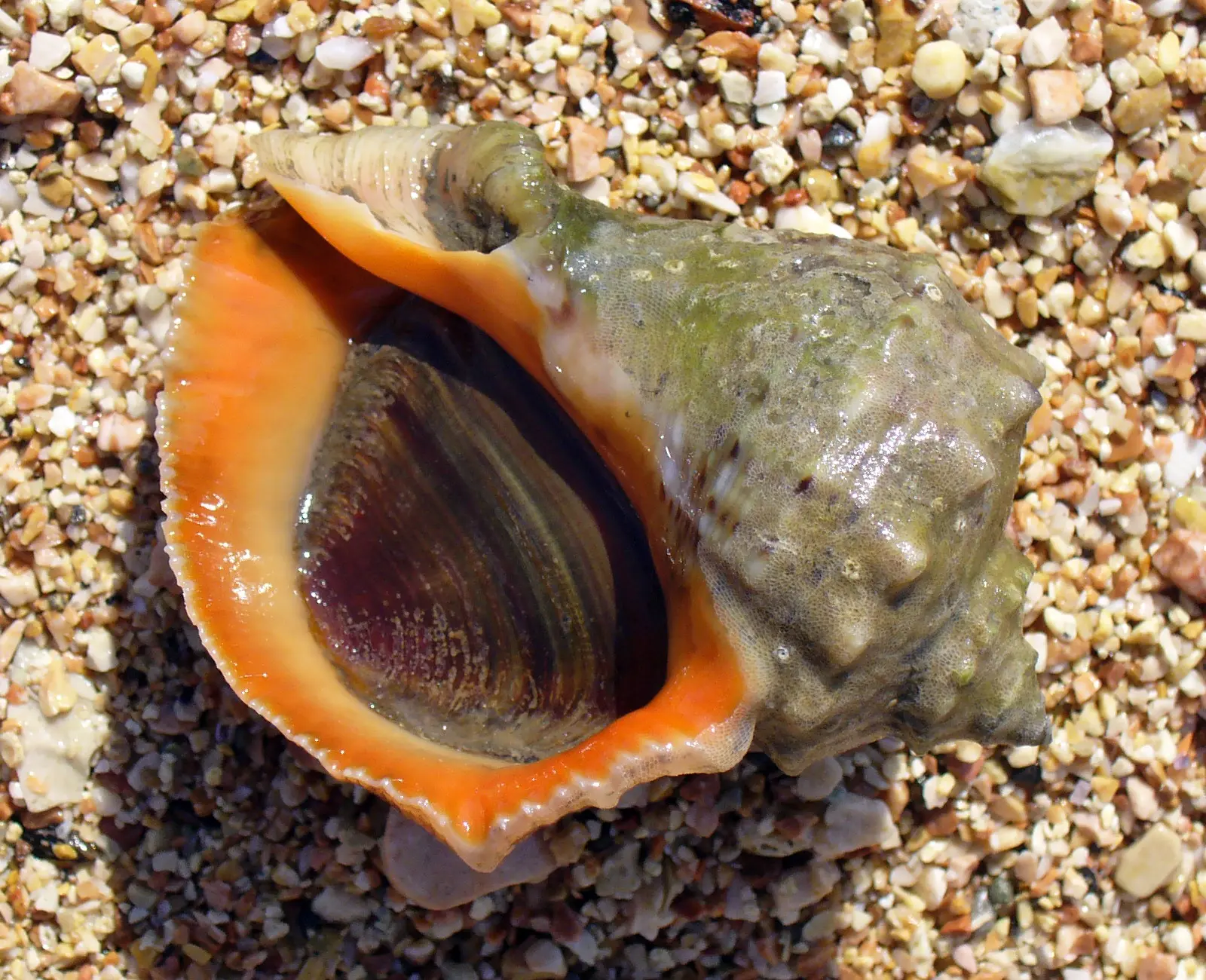
Veined rapa whelk
(Rapana venosa)
Horizon Species
How they spread:
- The young (larvae) float freely in the water for 24-80 days and so can be transported in ballast and bilge water as well as the water transported with farmed shellfish during this time.
- The young (larvae) can also be transported by tides and currents.
Why they are a problem:
- They are voracious predators of oysters and mussels and other native shellfish.
- They can cause significant economic damage to shellfish industries.
For more information, see the GB NNSS Information Portal and the NBN Atlas.
–
📸 © Veined rapa whelk – Amgueddfa Cymru
See Policy and Legislation page for information on INNS, aquaculture and the law.
Best practice guidance for aquaculture operators and personnel:
✅ Ensure that cages, trestles and other aquaculture equipment are regularly checked for fouling and cleaned appropriately. Ensure they are thoroughly cleaned and dried before relocating to a new site / location
✅ Check source site for known INNS and maintain vigilance. See Links and Resources for information to assist with this
✅ Check aquaculture stock prior to movement onto or off site for contamination or signs of disease, and quarantine stock prior to introduction. Use floodlights at night to allow effective visual inspection
✅ Treat equipment and stock that have been colonised by INNS
✅ Remove unused equipment and stock from the water
✅ Provide equipment (including PPE) to be used and stay on site where possible
✅ For planning or undertaking minor work at a site, see site maintenance and construction
Some methods below may require further research, planning and trialling before implementation. Any action that requires a Marine licence and/or Habitat Regulations Assessments, should follow the direction, advice and approval from the relevant authorities
✅ Where possible, avoid deploying equipment and out-planting shellfish during the spawning periods of fouling INNS
✅ For mussel spat collection, use materials that maximise spat settlement but minimise fouling
✅ For oyster cultivation, facilitate in-situ movement of the shells during the growing phase, where appropriate
✅ For oyster cultivation, add expanded clay aggregate or lava rock to oyster culture trays
✅ For oyster cultivation, explore the use of rotating containers (ortacs) or bags that can be turned by hand to reduce the risk of fouling INNS settling
See Marine Biosecurity Action Plan for Wales for information on the seven main areas of biosecurity that cover all pathways in Welsh seas. Click here for useful links and resources.