
Recreational Activities
This page explains how recreational activities can spread INNS, how INNS affect recreational activities, the main high-risk species, and best practice guidance to reduce their introduction and spread.
You can find full details and recommended biosecurity actions, in the Recreational Activities Pathway Action Plan for Wales.
About the pathway
Animals (as eggs, larvae, juveniles or adults) and seaweed (as fragments or spores) can be moved between locations by watercraft, equipment (e.g., buoyancy aids and SCUBA diving regulators) and clothing (e.g., wetsuits). INNS can be caught up in small gaps or water-retaining areas in watercraft (e.g., kayak hulls).
Equipment and clothing that is left damp can provide a surface on which INNS can survive and then be spread to a new area when it is used again. Some INNS can be hard to see, especially as eggs or larvae, and users may not be aware that they are on or in their equipment (including snorkels, regulators, surfboards, paddles, kites) and clothing (e.g., swimwear and wetsuits). Equipment may also be difficult to clean e.g. large wind foils.
Boards and small watercraft can be easily taken over land to different waterbodies, connecting different locations. Short transit times between waterbodies may increase the potential for organisms to survive.
Recreational events and competitions, such as sea-rowing regattas and triathlons, can present an even greater risk as multiple watercrafts may have come from outside the region to take part in the event. See events resources for information on biosecurity at events including an event biosecurity plan template.
How do INNS impact recreational activities?
- Impeding activity:
Seaweeds like Japanese wireweed can create vast floating mats which can become tangled around people and equipment. The mats can block out light or sink and smother seabed habitats, impacting the marine life that may have drawn SCUBA divers and snorkellers to visit. Algal mats can prevent boards, canoes, kayaks and other vessels from being able to move through the water.
- Creating an unpleasant environment:
These seaweeds can wash up on to beaches, often in very large quantities, where it can rot, releasing unpleasant or harmful odours. INNS can also create unpleasant and even hazardous conditions for recreational users. The Japanese skeleton shrimp can become attached to swimwear, equipment and hair in large numbers and the Pacific oyster, which has a sharp, jagged shell and forms dense reefs, can cause cuts and scrapes to people and pets.

Kayakers – Keith Peek
Example INNS relevant to recreational activities
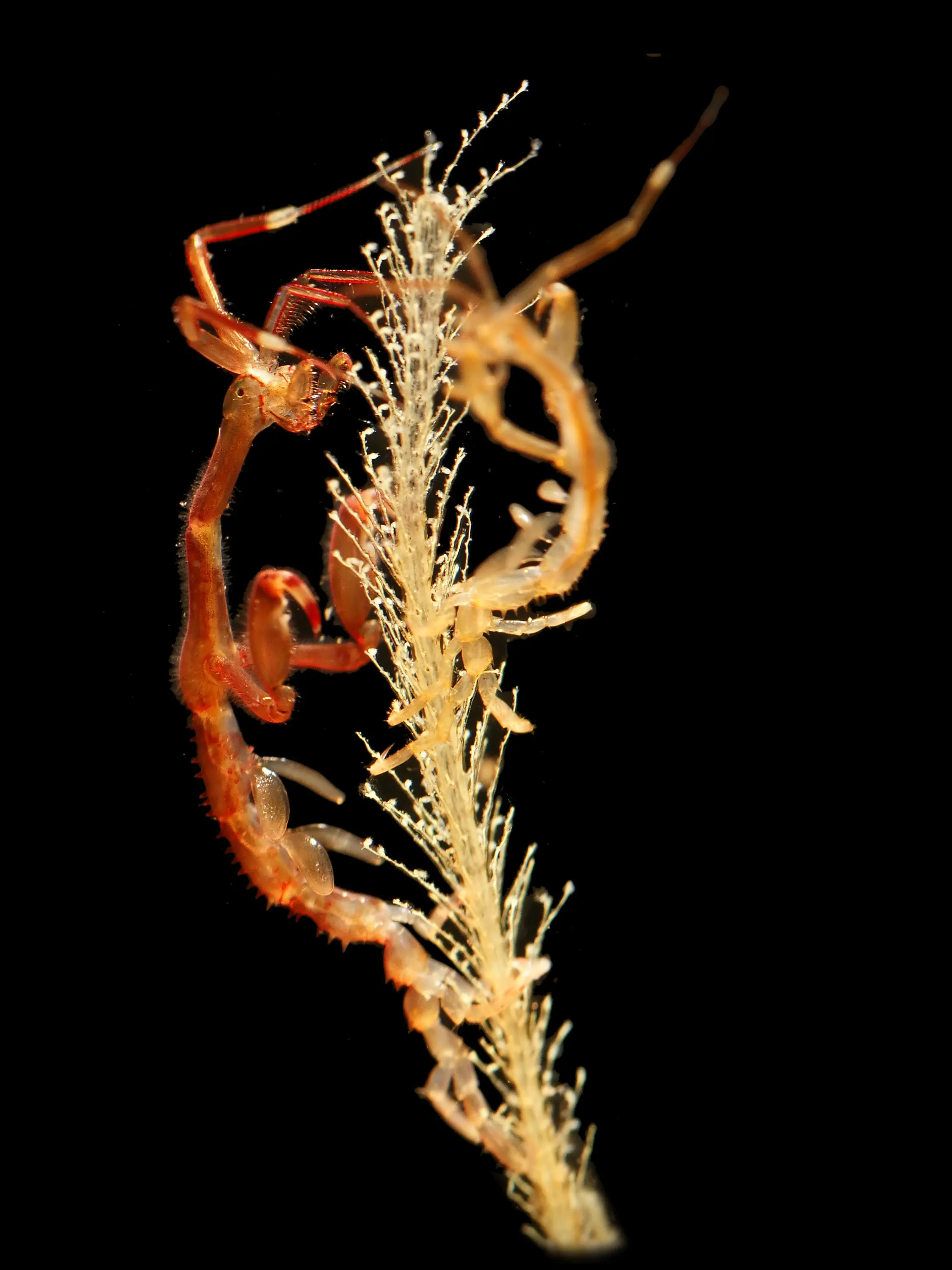
Japanese skeleton shrimp
(Caprella mutica)
How they spread:
- Difficult to detect due to small size (usually under 50mm).
- Minimal movement of adults through currents and tides, so predominantly moved as ‘hitchhikers’. Transported in water-retaining features or attached to clothing and equipment.
- Transported in water that is moved with shellfish or can cling onto shellfish, boats and equipment.
Why they are a problem:
- Compete with native species for food and space.
For more information see the GB NNSS Information Portal and NBN Atlas.
–
📸 © Japanese skeleton shrimp – Hans Hillewaert
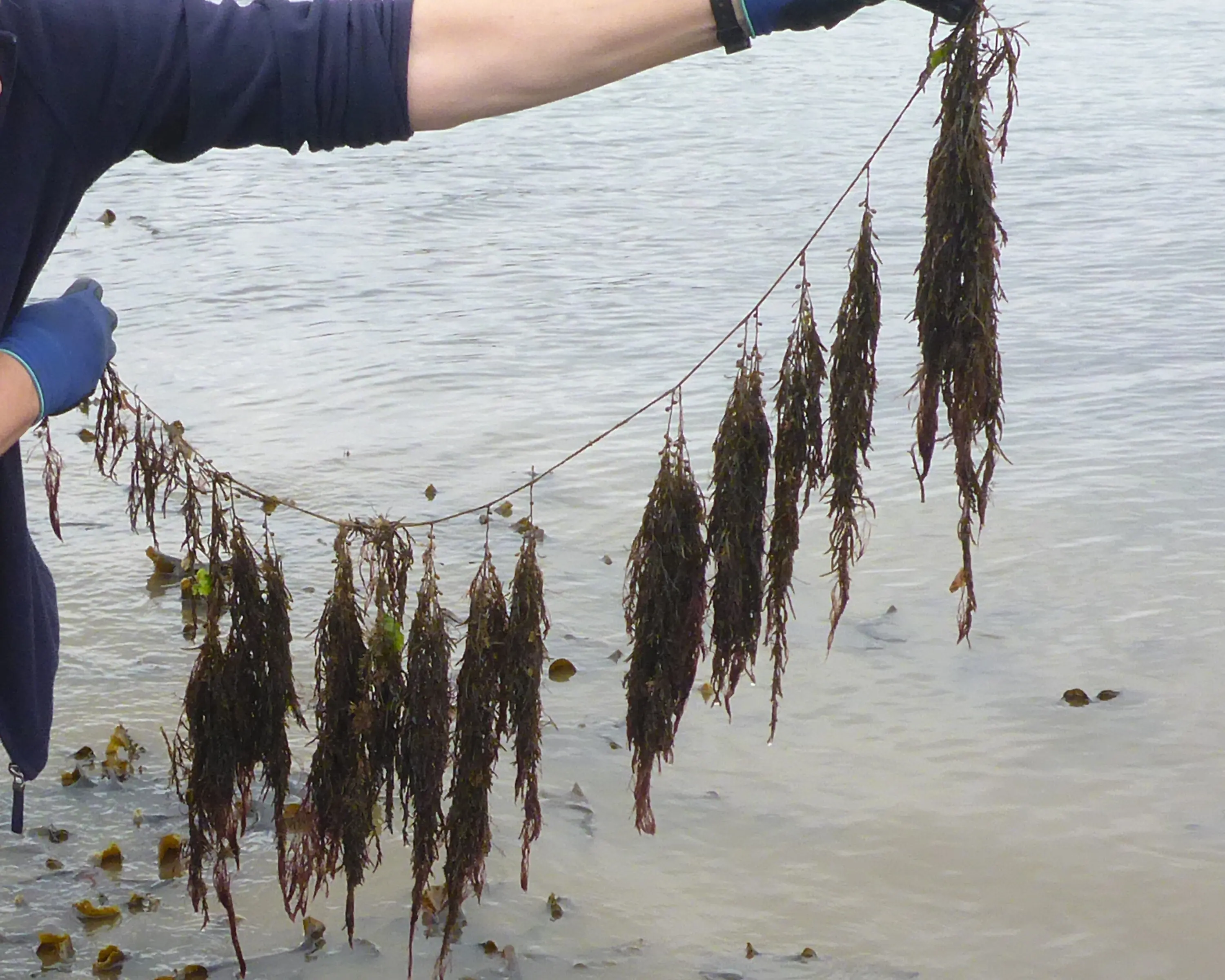
Japanese wireweed
(Sargassum muticum)
How they spread:
- Can break into fragments which can survive for up to three months.
- Fragments can survive in water-retaining features of boats and equipment, which means they can be introduced to new areas if they’re not properly cleaned before being used in a new area.
- Strands and fragments can become caught in propellers and other gear.
- Fragments can also be transported by tides and currents.
Why they are a problem:
- Form large floating mats that block waterways and smother beaches.
- Become tangled in propellers and fishing gear, causing a nuisance to the user and damage to gear.
- Overgrow and outcompete native seaweeds and important habitats such as seagrass.
For more information see the GB NNSS Information Portal and NBN Atlas.
–
📸 © Japanese wireweed – John Bishop (MBA)
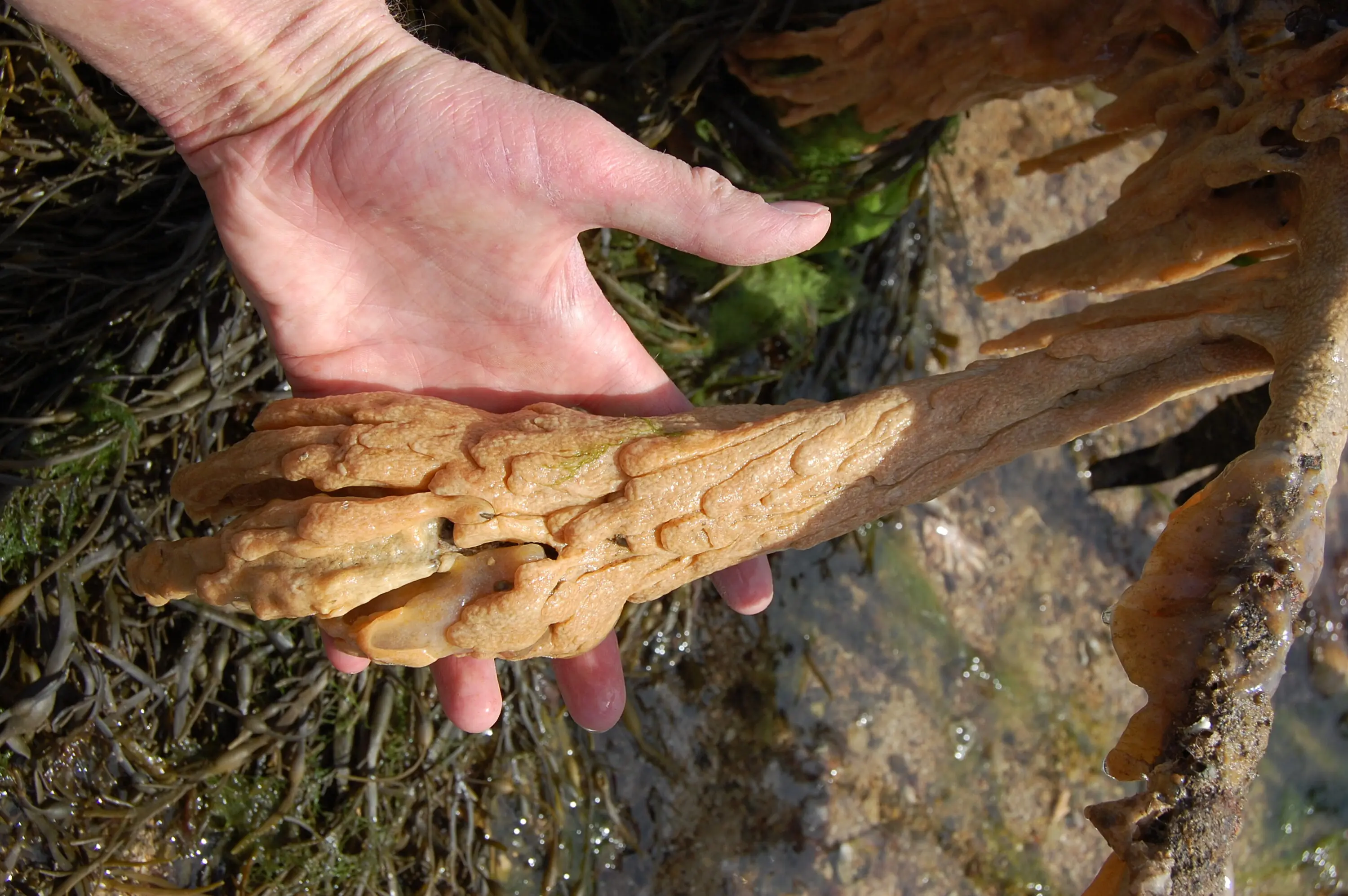
Carpet sea squirt
(Didemnum vexillum)
How they spread:
- Can break into fragments that can be transported by tides and currents, which can then reattach and regrow elsewhere, these fragments can survive for up to 30 days.
- Attach to boat hulls, marina structures and farmed shellfish which when moved can cause it to spread.
- Fragments can survive in water-retaining features of boats and equipment, which means they can be introduced to new areas if they aren’t properly cleaned before being used in a new area.
Why they are a problem:
- Smother native species and farmed shellfish, causing loss of biodiversity and commercial profit.
- Foul equipment, boats and infrastructure, increasing cleaning costs and time.
- Change natural seabed habitats, which can impact our native species.
For more information see the GB NNSS Information Portal and NBN Atlas. A link to the Species Action Plan can be found here.
–
📸 © Carpet sea squirt – Joe Ironside
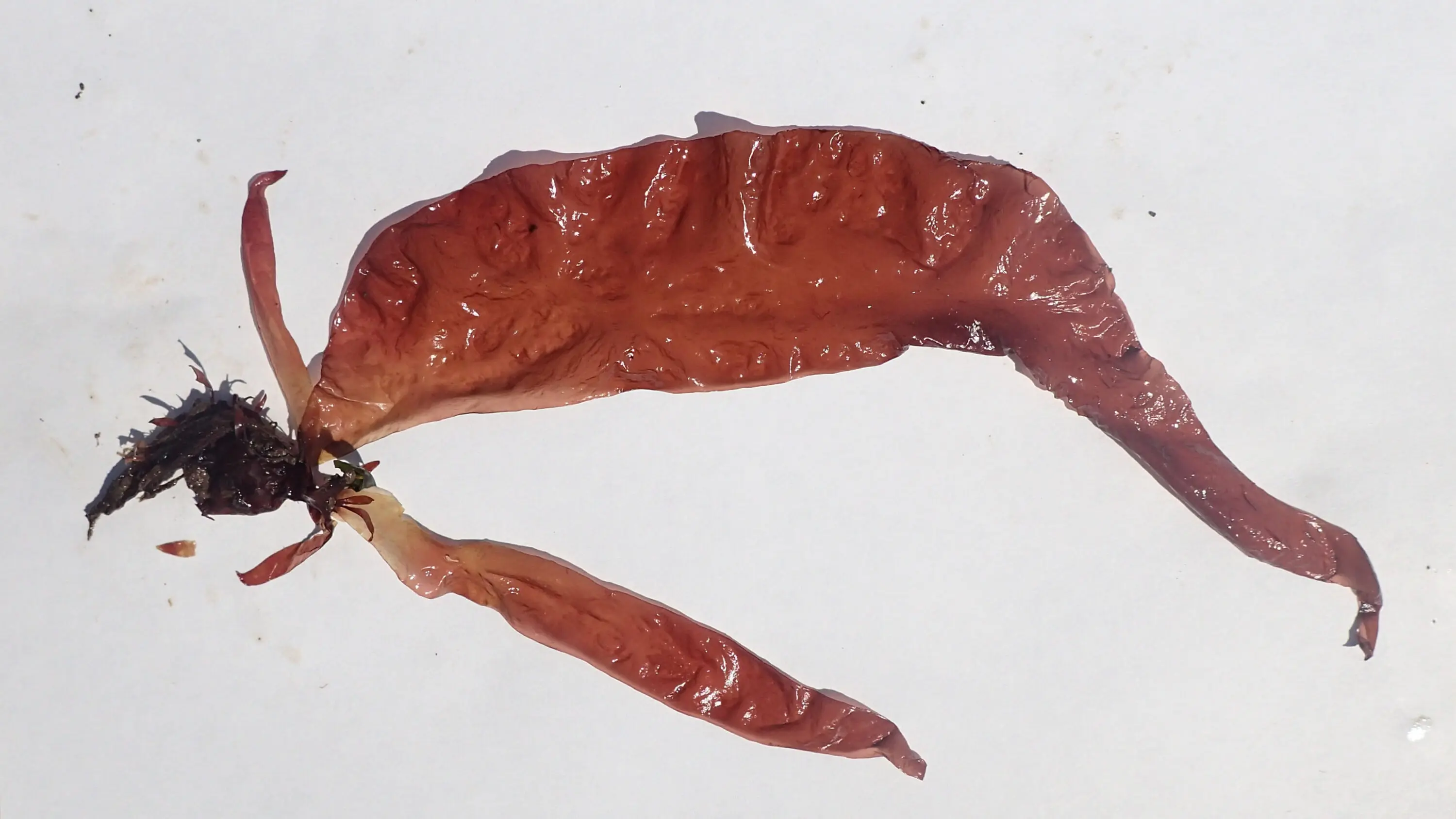
Devil’s tongue weed
(Grateloupia turuturu)
How they spread:
- Attach to boat hulls and shellfish, which when moved can cause it to spread.
- Tiny spores (reproductive structures) can be transported in ballast water and in water that has been retained in equipment.
- Strands can become entangled in equipment, which when moved can cause it to spread.
Why they are a problem:
- Overgrow and outcompete native seaweeds and important habitats such as seagrass.
- Foul or become tangled in nets, ropes, and aquaculture equipment, increasing cleaning costs and time.
For more information see the GB NNSS Information Portal and NBN Atlas.
–
📸 © Devil’s tongue weed- Chris Wood (MBA)
Best practice guidance
Best practice for paddlers:
✅ Ensure that paddleboards, kayaks, surfboards or other watersports equipment are free of debris and that any standing water (e.g., in crevices) is drained and dried. Use a towel or sponge to dry surfaces thoroughly
✅ Wash and dry additional equipment (e.g., buoyancy aids, dry bags)
✅ If equipment is being used abroad, make sure that it is clean and dry before travelling between locations

Surfboard – Chloe Powell Jennings
Best practice for sea swimmers and SCUBA divers:
✅ Ensure that wetsuits, clothing and equipment (including BCDs, weight belts and regulators) are checked and cleaned (and dried if possible) before next use.
✅ If visiting more than one area in a short period of time, use spare, dry clothing and equipment, in the second area, if possible. If not possible, check and clean clothing and equipment before leaving an area, ensuring that any animal/plant material is kept at that site and not moved to the next area
✅ Clean any kit, equipment and clothing, preferably with freshwater, paying attention to water-retaining or hard-to-reach areas
✅ Dry equipment and clothing for as long as possible between uses
See Marine Biosecurity Action Plan for Wales for information on the seven main areas of biosecurity that cover all pathways in Welsh seas. Click here for useful links and resources.

Freediver – Raymond Beasant