
Recreational Boating (small boats and large boats)
This page explains how recreational boating can spread INNS, how INNS affect boating activities, the main highrisk species, and best practice guidance to reduce their introduction and spread.
You can find full details and recommended biosecurity actions, in the Recreational Boating Pathway Action Plan for Wales (small boats) and (large boats).
About the pathway
Animals (as eggs, larvae, juveniles or adults) and seaweed (as fragments or spores) can be moved between locations by boats and their equipment. INNS can be caught up in small gaps and water-retaining areas, on clothing and equipment (e.g., boat propellers, anchors, buoyancy aids), or attached to the hulls of boats themselves.

Diagram of potential areas on a boat where INNS can accumulate. Base diagram: J/105 © J/Boats Inc. RI, USA [www.jboats.com/]
Biofouling (or biological fouling) is the build-up and growth of organisms (plants, animals, bacteria and detritus), including INNS, on underwater surfaces. Common biofouling organisms include sea squirts, barnacles and sponges. Biofouling can quickly build-up if a boat stays in the same place in the water for weeks or longer. If the boat is then moved or travels to a different location without first being cleaned, the species that have built-up on the boat can then spread to this new location.
Cleaning fouled boats in the water, or cleaning ashore where debris is washed straight back into the sea, may allow INNS to survive and establish in the area. Fragments could be transported to new areas with the tides and currents.
Surfaces above the waterline and damp equipment stored onboard (e.g., anchors, lifejackets and fenders) can harbour species that later spread when used again in a new area. Tanks, pipes and crevices that retain water can also contain INNS which can then be spread as the water is released or drained at another location.
Large recreational boats
Large boats have a large underwater surface area where INNS can accumulate, including hard-to-reach areas. Because large boats are harder and more expensive to remove from the water, they may be cleaned and left to dry less often.
Large boats are capable of travelling long distances between areas that INNS could not cross on their own. Large boats are also more likely to be moved by sea than smaller boats (e.g., when being sold), increasing the likelihood of INNS surviving the journey and being introduced to new areas.
See the Large Boats Pathway Action Plan for more information.
Small recreational boats
Smaller boats often make frequent, shorter trips, which can spread INNS more quickly than their natural spread might otherwise allow.
Small boats can be brought out of the water more often for cleaning and drying. However, as these smaller boats are more easily removed from the water, they are more likely to be transported over land to be launched in the water at new locations than large boats. This presents a substantial risk if the boat isn’t cleaned and dried between locations.
Boating events, like regattas, can present an even greater risk as multiple boats may have come from outside the region to take part in the event. This can facilitate the introduction/spread of INNS to/from international or distant locations. See Links and Resources for information on biosecurity at events including an event biosecurity plan template.
See the Small Boats Pathway Action Plan for more details.
How do INNS impact recreational boating activities?
- Increased drag and reduced efficiency:
INNS can attach to boat hulls, pontoons and other equipment in high densities, impacting normal usage and cost to maintain/operate. Heavy biofouling increases drag when underway, resulting in higher fuel, cleaning and antifouling costs. Some INNS, like the trumpet tubeworm, can cement themselves to hulls and submerged metal boat parts requiring time-consuming and costly removal.
- Cause obstructions and damage paintwork:
Removing hard fouling species can cause damage to paints, coatings and the hull itself. INNS can cause obstructions in water intakes on boats or become tangled in propellors, for example, with large mats of seaweed, such as Japanese wireweed.
- Increased costs and movement restrictions:
Increased cleaning and maintenance of marinas and harbours could result in costs being passed from the marina to boat owners. Some marinas and harbours may also turn away fouled boats and prevent them from mooring.

Fouled propeller – Heidi Reynolds, Dale Sailing

Fouled ladders – Holly Peek
Example INNS relevant to recreational boating
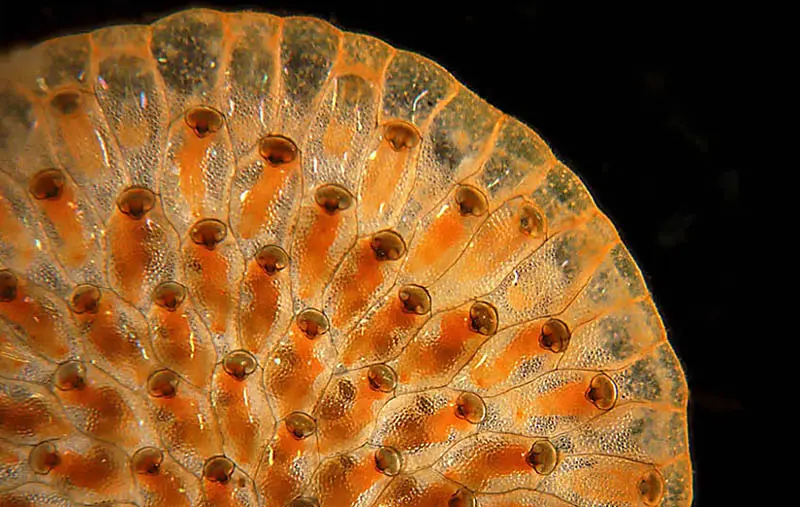
Red ripple bryozoan
(Watersipora subatra)
How they spread:
- Attach to boat hulls, marina infrastructure, equipment and shellfish which when moved can cause it to spread.
- Attach to seaweed fragments and drift to new areas and colonise.
Why they are a problem:
- Cause heavy fouling, when fouling occurs on mussels it can affect aquaculture yields.
- Because this species is resistant to copper antifouling paints, it can still grow on treated boat hulls. Once established, it creates a surface that allows other INNS to settle and grow more easily.
- Can form large colonies that affect native species.
For more information see the GB NNSS Information Portal and NBN Atlas.
–
📸 © Red ripple bryozoan – John Bishop (MBA)
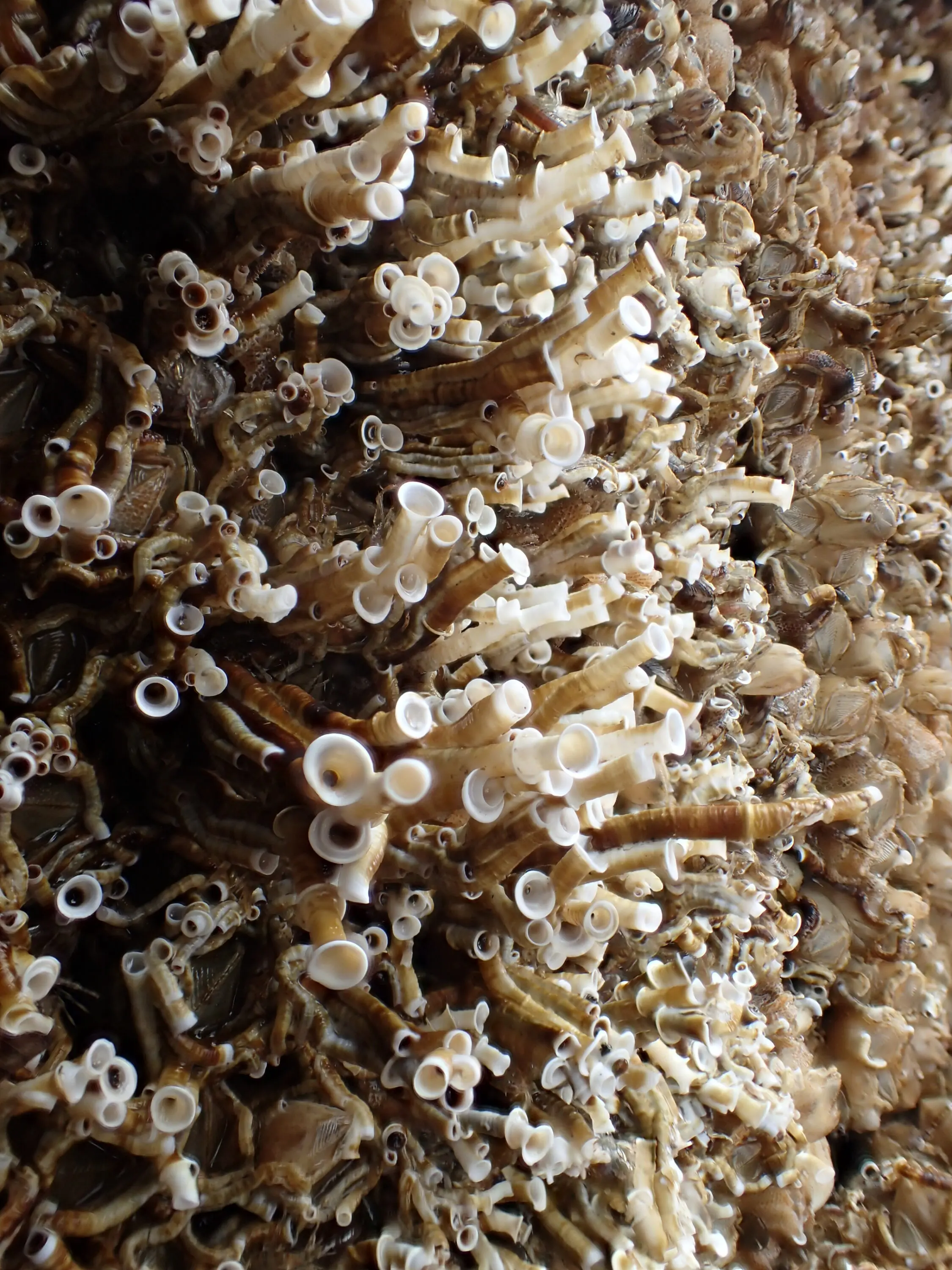
Trumpet tubeworm
(Ficopomatus enigmaticus)
How they spread:
- The young (larvae) float freely in the water for 1-3 months and so can be transported through ballast and bilge water during this time.
- Adults attach to boat hulls, equipment, structures and shellfish which when moved can cause it to spread.
- Tolerant of a wide range of environments, including areas where there is large freshwater input, such as marinas.
- The young (larvae) can also be transported by tides and currents.
Why they are a problem:
- Dense growth can form large reeflike structures that alter habitats.
- Block pipes and foul boats, equipment and structures – causing costly maintenance and cleaning.
- Heavy fouling can be heavy enough to sink pontoons and small boats.
- Outcompete native species.
- Resistant to antifouling paint, making it difficult to prevent it attaching to boats.
For more information see the GB NNSS Information Portal and NBN Atlas. A link to the Species Action Plan can be found here.
–
📸 © Trumpet tubeworm – Paul Brazier, Natural Resources Wales
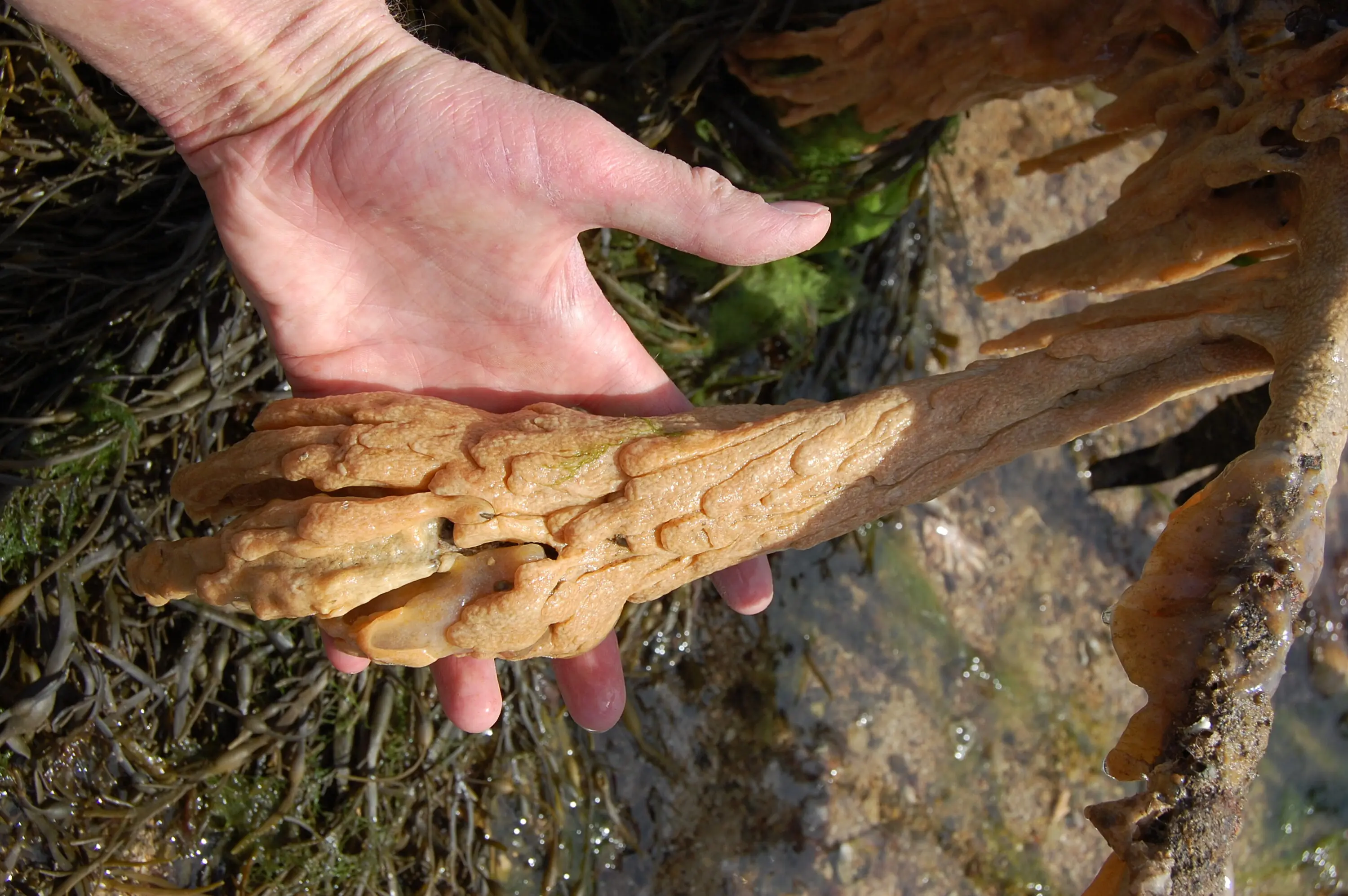
Carpet sea squirt
(Didemnum vexillum)
How they spread:
- Can break into fragments that can be transported by tides and currents, which can then reattach and regrow elsewhere, these fragments can survive for up to 30 days.
- Attach to boat hulls, marina structures and farmed shellfish which when moved can cause it to spread.
- Fragments can survive in water-retaining features of boats and equipment, which means they can be introduced to new areas if they aren’t properly cleaned before being used in a new area.
Why they are a problem:
- Smother native species and farmed shellfish, causing loss of biodiversity and commercial profit.
- Foul equipment, boats and infrastructure, increasing cleaning costs and time.
- Change natural seabed habitats, which can impact our native species.
For more information see the GB NNSS Information Portal and NBN Atlas. A link to the Species Action Plan can be found here.
–
📸 © Carpet sea squirt – Joe Ironside
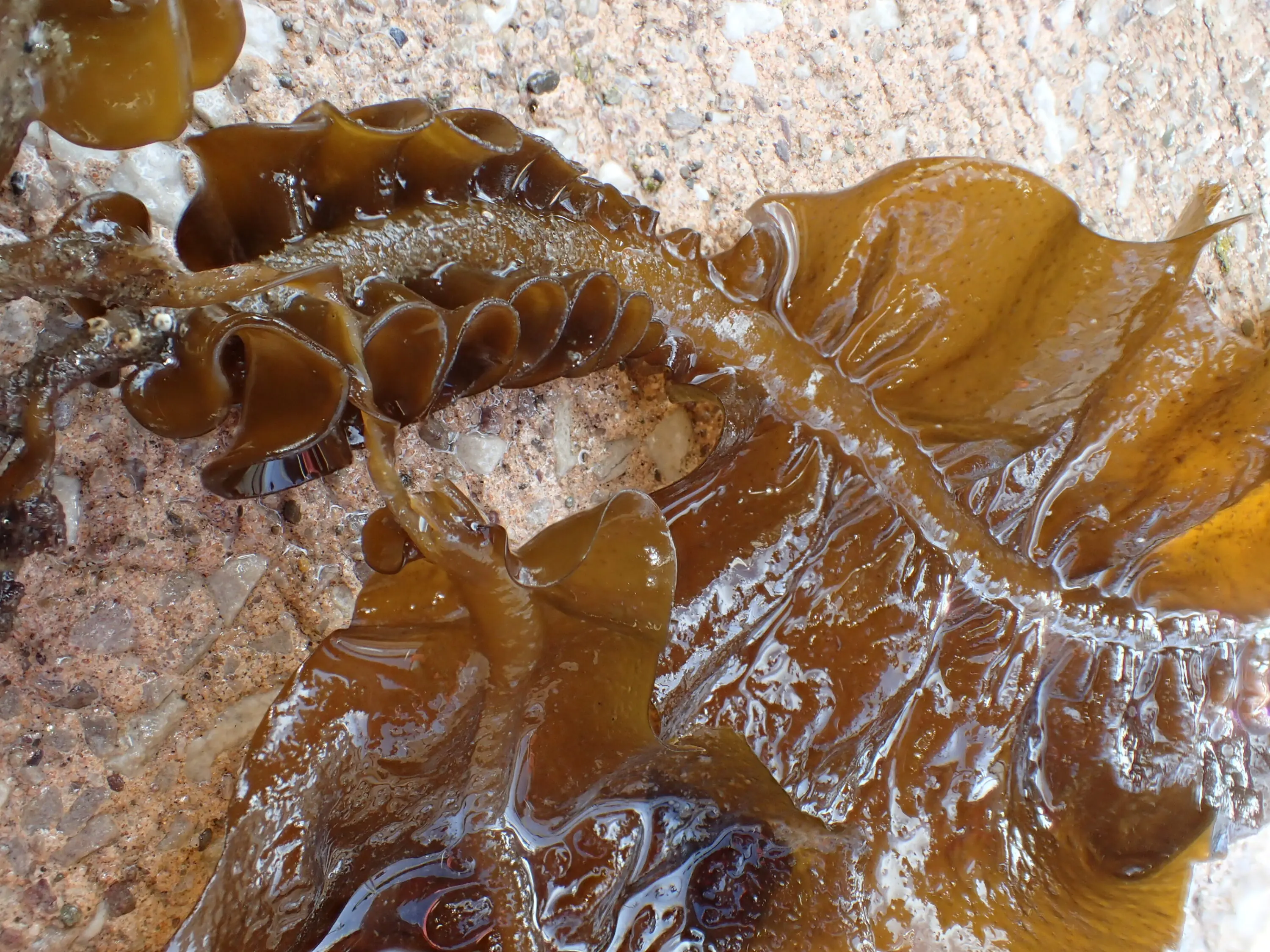
Wakame
(Undaria pinnatifida)
How they spread:
- Strands attached to boat hulls and shellfish.
- Spores (reproductive structures) transported in ballast or bilge water, or in the water transported with shellfish.
- Spores can survive for up to 2 years under certain conditions, and can survive a wide range of temperatures which means spread over long distances is possible.
Why they are a problem:
- Form dense forests that outcompete native seaweeds.
- Foul boats and marina structures, and can become tangled in nets, ropes and aquaculture equipment, increasing cleaning costs and time.
- Take up valuable space needed by commercially important shellfish.
For more information, see GB NNSS Information Portal and NBN Atlas.
–
📸 © Wakame – Paul Brazier
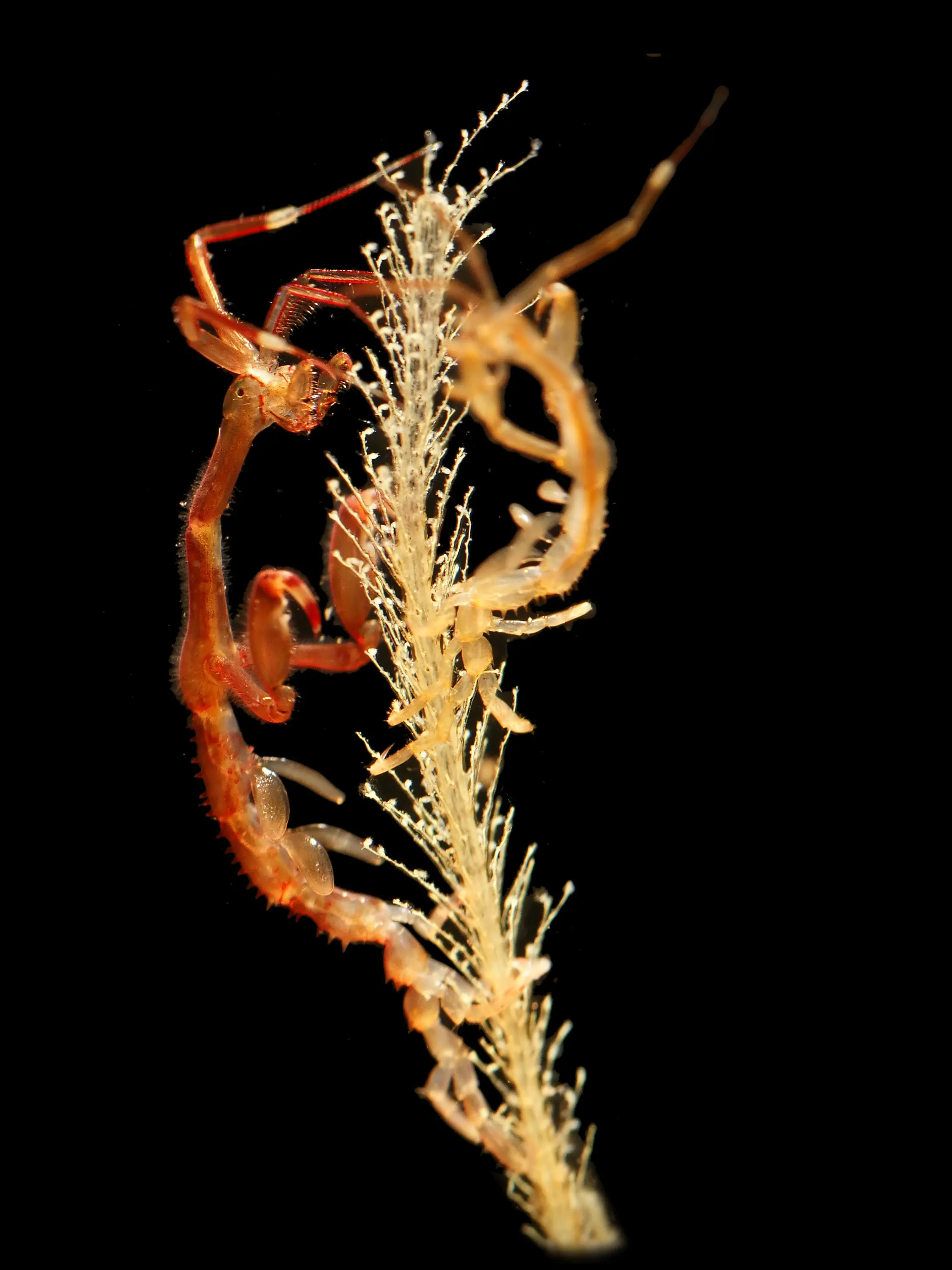
Japanese skeleton shrimp
(Caprella mutica)
How they spread:
- Difficult to detect due to small size (usually under 50mm).
- Minimal movement of adults through currents and tides, so predominantly moved as ‘hitchhikers’. Transported in water-retaining features or attached to clothing and equipment.
- Transported in water that is moved with shellfish or can cling onto shellfish, boats and equipment.
Why they are a problem:
- Compete with native species for food and space.
For more information see the GB NNSS Information Portal and NBN Atlas.
–
📸 © Japanese skeleton shrimp – Hans Hillewaert
See Policy and Legislation page for information on INNS, pathways and the law.
Best practice guidance
This information aligns with the GB recreational boating PAP which contains:
- A Code of Conduct for recreational boating (Annex 2)
- Biosecurity guidance for boat users (Annex 3)
- An example biosecurity clause for inclusion in club constitutions (Annex 4) and berthing agreement terms and conditions (Annex 6)

Boat being lifted – Heidi Reynolds, Dale Sailing
Best practice for boat cleaning:
✅ Boats with visible or heavy fouling should be taken out of the water for cleaning. This should ideally be done in a contained area of hard-standing ground with appropriate drainage, above the high-tide line
✅ Material that is cleaned off the boat, and the water used to clean it off with, should not be allowed to go back into the sea. This material and water could contain flakes of anti-fouling paint and INNS that could harm the environment
✅ Ensure boats are cleaned regularly enough that fouling is kept to just a slime layer. Regular maintenance, including the appropriate application of antifouling, is key to preventing the build-up of biofouling
Best practice for marina operators / managers and marine services:
✅ Clean and dry infrastructure and equipment before it is moved between locations
✅ Remove any unused structures and equipment from the water (e.g., buoys, ropes, fenders, warps and moorings)
✅ Check infrastructure for biofouling regularly and clean or remove when necessary. If possible, clean removeable structures and equipment (e.g., floating pontoons and mooring buoys) on land, ensuring that debris does not re-enter the water
✅ Encourage users to check and clean their boats and equipment when entering and leaving the site
✅ Provide or promote existing biosecurity stations/cleaning facilities
✅ Ensure antifouling treatment is maintained on boats and submerged infrastructure where appropriate
✅ Make the most of any natural flows of freshwater into your site. Expose INNS to fresh water through immersion or wash down
✅ See Site Maintenance and Construction for more information
Best practice for retail/sales:
✅ Provide and promote best practice biosecurity actions to customers and members
e.g., encourage to Check, Clean, Dry equipment, install signage and provide leaflets in store, add awareness information to website and communications
Best practice for clubs and boaters:
Where possible, all boaters should Check, Clean and Dry equipment, boats and clothing after use
✅ Encourage members to undertake biosecurity best-practice at the start and end of their activity
✅ Check boats regularly for fouling on submerged surfaces and debris or standing water on board (e.g., in anchor lockers)
✅ Ensure boats have antifouling treatment and are cleaned regularly enough that fouling is kept to just a slime layer
✅ Check ropes, warp and chains for any animals, plants or debris when hauling anchor and clean (with freshwater if possible) and dry before storing
✅ If equipment is being used abroad, ensure that it is clean and dry before travelling between locations
See Marine Biosecurity Action Plan for Wales for information on the seven main areas of biosecurity that cover all pathways in Welsh seas. Click here for useful links and resources.
